
Policy Forum Politique is a new publication format that aims to stimulate debate by presenting a wide range of expert opinion on a topic of national security significance to Canada. For this fifth edition, we ask four experts for their perspectives on the following question: Not long after Prime Minister Mark Carney’s announced a rekindled ‘strategic partnership’ with China, a country that Canada’s 2022 Indo-Pacific Strategy cast as ‘an increasingly disruptive global power’, the United States has warned that any free trade agreement with that country could fundamentally harm Canada and jeopardize CUSMA, which is under review later this year. In your expert view, how should Canada go about managing its diplomatic and economic relationship with China in 2026?

 Balkan Devlen | MacDonald-Laurier Institute
Prime Minister Mark Carney’s “strategic partnership” with China rests on four assumptions: that China is a reliable trading partner, that Ottawa possesses meaningful leverage with Beijing, that cozying up to Washington’s chief geopolitical rival will somehow strengthen Ottawa’s hand in CUSMA renegotiations, and that this government can skillfully manage the attendant risks. All four assumptions are flawed.
China has a long history of economic coercion, including against Canada, predating Trump 2.0. Canada’s trade dependence on the United States dwarfs any leverage that a China gambit might provide. Signaling closer ties with Beijing is far more likely to provoke American backlash than extract concessions. Meanwhile, the federal government’s recent track record—from foreign interference failures to the Two Michaels debacle to questionable industrial policy decisions like EV subsidies—offers little confidence in its capacity to walk this tightrope. Arguing that Carney represents a fresh start ignores that the broader team remains largely unchanged.
Carney’s Davos rhetoric about middle powers banding together rings hollow. As China pressures Japan to alter its policies, Ottawa remains conspicuously silent. Seeking bilateral deals with an authoritarian power that has interfered in Canadian elections, engaged in espionage, subversion, and economic coercion, and detained Canadian citizens is not how middle powers protect their interests.
What should Canada do? The ideal path would see Ottawa join a coalition of like-minded democracies—the United Kingdom, Germany, Japan, France—to collectively resist Chinese economic coercion while working with, not against, the United States to strengthen transatlantic economic ties.
Canada should also draw a clear line: expand agricultural and energy exports to China while firmly restricting cooperation in intellectual property, critical minerals, advanced manufacturing, and scientific research. Simultaneously, Ottawa must pursue robust counterintelligence operations to signal that Chinese interference in Canadian affairs will not be tolerated. Commodity trade poses manageable risks; deeper integration does not.
Dr. Balkan Devlen is the Senior Fellow at the Macdonald-Laurier Institute and Co-Founder and Principal of Pendulum Geopolitical Advisory. He is a teacher, foreign policy analyst, and consultant with over two decades of experience across three continents.

 Yuxi Liu | ShanghaiTech University
Breaking the Lens, Seeing China Anew
As Canada charts its course with China in 2026, its primary challenge is not technical negotiation but a cognitive one: it must break free from mental models constrained by labels like “increasingly disruptive power” and the habitual lens of Washington. Historically, however, Canada’s most consequential China policies, from Pierre Trudeau’s rapprochement onward, were grounded in an ability to engage China on its own terms, beyond dominant geopolitical scripts.
A fundamental shift is thus imperative. Canada must cultivate a new diplomatic framework that recognizes the diverse dynamics of Chinese society and the aspirations of its people, that draws on fine-grained research rather than impute intentionality, and that develops a spirit of constructive exploration for identifying mutually beneficial areas for cooperation. For this new framework to be substantive, it must be nourished by a deeper, more nuanced public understanding of China. This requires a conscious shift away from reactive, threat-centric narratives. A society that can discuss China without automatic suspicion is better equipped to make strategic, interest-based decisions. Furthermore, the immense value of Canada’s people-to-people ties – its vibrant Chinese Canadian communities, students, and sister-city relationships – must be strategically recognized and nurtured. These bonds form a crucial bridge for contact and mutual understanding, especially when official relations cool.
Achieving this demands a concerted, long-term investment from government, academia, the business community, and other actors of civil society – initiatives pursued not for fleeting political gain but for foundational understanding. Canada’s path forward begins in 2026 with the courage to dismantle these cognitive barriers and to build a policy grounded in its own national interest and comprehensive and understanding of an authentic China. Only then can a stable and sustainable roadmap for bilateral relations be drawn.
Dr. Yuxi Liu is Assistant Professor in ShanghaiTech University’s Institute of Humanities and an expert of Sino-Canadian relations. She holds a Ph.D from the Université du Québec à Montréal in history and previously also held research positions in Switzerland and France.
 Pascale Massot | University of Ottawa
Carney’s visit to China needs to be situated within a broader context
First, the North American context forms the immediate backdrop and established the dominant frame around economic resilience and diversification objectives. These goals are both essential and difficult to balance given Canadian provincial politics and the joint review of CUSMA scheduled for this summer. The electric vehicle (EV) agreement raises major questions about the future of the EV industry and, more broadly, the future of the automotive industry in Canada. Here, the Canadian government will have to chart a course that reconciles the various interests at stake, all the while keeping an eye on the mid- to long-term.
Second, the geopolitical context also matters given the significant role that China plays internationally. Canadians must stop equating a functioning diplomatic relationship with the second economy in the world with an endorsement of that country’s policies. China is a major global power that influences a range of issues of national and international interest, and Canada must have a substantive relationship with that country. Anything short of that is not in Canada’s interests. To be sure, the relationship will not be all smooth sailing—there are areas where our interests overlap and others where they do not. This was true before and it remains true today, but this is not a return to some bygone era. This is a new era, one that must build on our bilateral history.
Canada’s 2022 Indo-Pacific Strategy labelled China ‘an increasingly disruptive global power’ and while the government has been skating around whether it has shifted position on this assessment, we must get used to holding more than one idea in our heads at the same time. The fact that China’s rise has disrupted the status quo and is transforming the world is more of a descriptive statement than anything else. This diagnostic matters, but what matters even more is what we do next. Prime Minister Mark Carney showed great assertiveness by going to China ahead of President Trump’s visit in April. Yet the visit did not resolve all the tensions and contradictions inherent in our relationship that require careful management over the coming years.
Pascale Massot is an Associate Professor at the School of Political Studies of the University of Ottawa. In 2022, she was a member of the Indo-Pacific Advisory Committee to the Canadian Minister of Foreign Affairs.

 Stephen R. Nagy | International Christian University, Tokyo
Managing China in 2026: Discipline, Leverage, and Guardrails
Canada should manage China in 2026 with disciplined, sequenced engagement—protecting core alliance equities with the United States while keeping narrow, interest-based channels with Beijing open.
First, Ottawa must treat CUSMA and the U.S. market as structural realities, not as one option among many. With the agreement under review, Canada should remove ambiguity: no FTA track with China, full transparency with Washington on any China-related commercial understandings, and clear enforcement that Canada will not become a transshipment route for Chinese goods into the U.S. The objective is de-escalation and predictability, not Davos applause.
Second, Canada should shift from “strategic partnership” language to “selective cooperation + risk management.” China is simultaneously a market and—per Canada’s own Indo-Pacific Strategy—an “increasingly disruptive global power.” Engagement should focus on non-strategic sectors (agri-food, consular cases, student mobility, climate where feasible), while erecting firm guardrails in critical minerals, advanced tech, data, and dual-use research.
Third, Ottawa should build leverage before engagement by tightening partnerships with Japan, South Korea, Australia, the EU, and Southeast Asian states—on supply chains, standards, and economic security. In practice: deepen CPTPP coordination, expand minilateral resilience arrangements, and pursue “plug-in” cooperation on maritime domain awareness, sanctions evasion, and critical inputs.
Fourth, Canada needs domestic democratic resilience as foreign policy: fully implement and enforce the foreign influence transparency registry, strengthen research security and university disclosure rules, and create actionable channels between intelligence assessments and political decision-making. If interference vulnerabilities persist, allies will discount Canada as a security partner, and Beijing will continue to exploit permissive seams.
Finally, Ottawa should communicate a simple doctrine: engage where interests overlap, deter where interests collide, and never trade continental security for short-term market relief.
In short: talk less grandly, align more carefully, diversify patiently, and engage China only where Canada can absorb coercion and still say no.
Dr. Stephen Nagy received his PhD in International Relations/Studies from Waseda University in 2008. His main affiliation is as Professor at the International Christian University, Tokyo. He is also a fellow at the Canadian Global Affairs Institute (CGAI); a visiting fellow with the Japan Institute for International Affairs (JIIA); a senior fellow at the MacDonald Laurier Institute (MLI); and a senior fellow with the East Asia Security Centre (EASC).
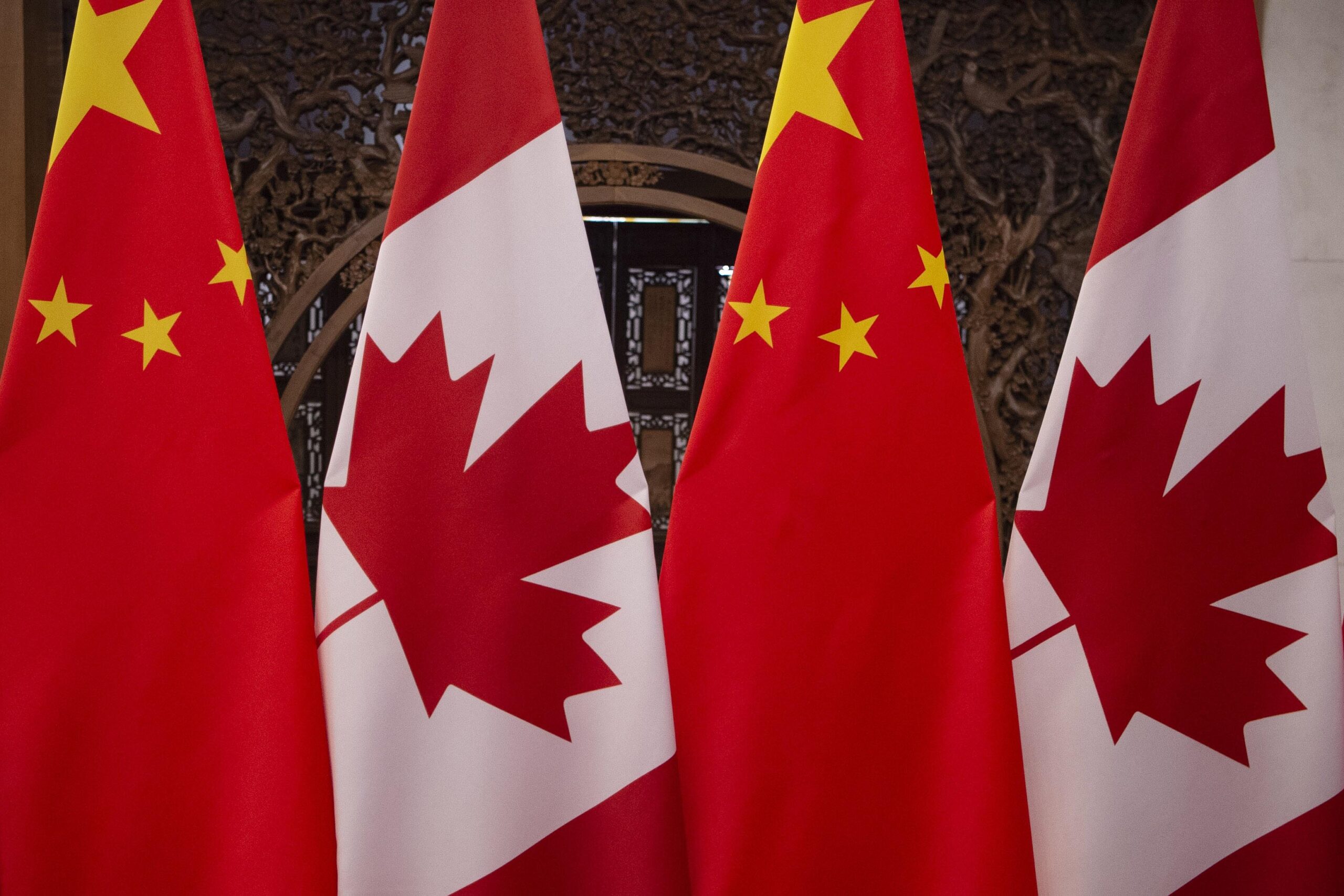
Image Credit: Fred Dufour-Pool/Getty Images



Comments are closed.