This brief is part of the Strategic Analysis Network’ special Back to the Future essay series, which was financed through a grant from the Department of National Defence’s MINDS program.
Summary
In June 1950, the invasion of South Korea confronted Canada with a strategic dilemma between the imperatives of collective security and internal military constraints. The unpreparedness of the Armed Forces reduced Ottawa’s room for manoeuvre, forcing the government into a gradual response shaped more by material necessity than by a pre-established strategy. U.S. pressure, parliamentary considerations, and the requirement for a United Nations mandate combined to produce a conditional engagement, most of which was ultimately redirected toward NATO in Europe. Three key lessons emerge for contemporary Canadian defence policy: military unpreparedness fundamentally constrains political options in times of crisis; managing external pressures requires clearly articulated guiding principles in advance; and an explicit prioritization of commitments across theatres of operation is essential to maintain both allied credibility and national strategic coherence.
Introduction
When, on June 26, 1950, forces of the Democratic People’s Republic of Korea crossed the 38th parallel and invaded the Republic of Korea, the Canadian Cabinet viewed the crisis with ambivalence: while the event held “great political importance,” it was considered by ministers to have only “minor strategic importance.” Politically, the crisis constituted a decisive test for the collective security system of the United Nations (UN) and for Canada’s credibility as a reliable partner. Strategically, however, the Korean Peninsula held limited relevance for Canada’s direct security, with Europe remaining, according to the Secretary of State for External Affairs, “the main front requiring defence.”
Only two months later, however, the Liberal government announced the creation of a Special Force of 4,485 personnel for the Korean theatre. This force would quickly double to nearly 10,000. In total, just under 27,000 Canadians would serve in Korea. The crisis also catalyzed rapid rearmament: defence spending peaked at over 7% of GDP in 1953, while Ottawa began a military deployment to Europe as early as 1951 that would continue until 1993. This rapid reversal raises a central question: through what mechanisms did Canada decide to send troops to Korea, and what factors determined the timing, scale, and nature of this engagement?
This strategic note examines the Canadian government’s decision-making process between June and December 1950. It highlights how U.S. pressure, internal military constraints, parliamentary considerations, and the principles of UN multilateralism combined to produce a gradual, cautious, and conditional response to the Korean crisis. The analysis underscores a persistent tension between three competing imperatives: meeting allied expectations, preserving Canadian decision-making autonomy, and maintaining sufficient military capabilities to ensure continental and European defence.
This case study thus provides three key lessons for contemporary Canadian defence policy. First, military unpreparedness fundamentally constrains the political options available in times of crisis, reducing Ottawa’s ability to respond autonomously to allied requests. Second, managing external pressures requires clearly articulated guiding principles in advance to avoid improvisation and preserve strategic flexibility. Third, in a context of limited resources and divergent priorities across theatres of operation, explicit prioritization of commitments is essential to maintain both allied credibility and national strategic coherence.
Military Unpreparedness as a Fundamental Decision-Making Constraint
When the Cabinet met on June 26, 1950, ministers noted that Canada had no forces immediately deployable. At the same time, officials from National Defence and External Affairs warned that, without external intervention, the government of the Republic of Korea could quickly fall. Prime Minister Louis St. Laurent nevertheless emphasized that deploying the airborne brigade would dangerously weaken the country’s defences. This fundamental material constraint—the absence of ready expeditionary capabilities—would shape the entire Canadian decision-making process in the months that followed.
Lester B. Pearson, Secretary of State for External Affairs, articulated the central strategic dilemma: U.S. intervention carried the risk of a broader conflagration, while inaction could lead to the rapid collapse of South Korea. Faced with this alternative, the Cabinet acknowledged the considerable political importance of the crisis without making an operational decision. This initial hesitation reflected the absence of immediately viable military options available to Canada at the outset of the conflict.
On June 28, the Cabinet adopted three initial measures: sending two officers as observers, consulting other UN members on their planned contributions, and assessing the usefulness of Canadian destroyers in Pacific naval operations. These decisions allowed Canada to signal political and multilateral commitment without undertaking a land deployment, while buying time to assess the evolving military situation and allied expectations, particularly those of the United States. During the parliamentary debate of June 26, Opposition Leader George Drew (Progressive Conservative) underscored the urgency of the crisis by noting that Korea was closer to Canada, in transport time, than Poland had been in September 1939. Despite this emerging consensus on the seriousness of the threat, concrete options remained limited.
Pearson’s subsequent statements to Parliament in August 1950 highlighted the extent of Canada’s unpreparedness. He acknowledged that prior defence planning had relied on a small, highly trained regular army primarily designed for continental defence, and that rapid expeditionary deployment had not been envisaged. The Chiefs of Staff confirmed this reality at the Defence Committee meeting of July 19, advising against any additional land deployment and indicating that any immediate dispatch would require dismantling the Mobile Striking Force, Canada’s only continental defence asset.
Resisting U.S. Pressure While Preserving Decision-Making Autonomy
From the earliest days of the crisis, Canadian decision-making was strongly influenced by U.S. pressure, while also being framed by Ottawa’s explicit desire to preserve political autonomy. On June 27, the U.S. ambassador to Ottawa, Stanley Woodward, presented Pearson with a draft statement from President Truman regarding the North Korean attack. Pearson firmly opposed two key elements: the reference to “communist imperialism” and the U.S. intention to act militarily before obtaining formal UN authorization. He believed Washington was taking the initiative while expecting others to support it after the fact.
This was not an abstract attachment to multilateralism, but a fundamental political condition for maintaining parliamentary consensus and public support. The issue of command structure crystallized this tension when Washington proposed on July 4 that UN forces operate “under a unified command under the United States.” Pearson strongly objected, asserting that Canada attached “the greatest importance to United Nations auspices” for any participation. The compromise reached on July 7, authorizing unified command under U.S. leadership while affirming the UN character of the operation, temporarily reconciled these positions.
As the military situation deteriorated in July, U.S. pressure intensified. On July 14, UN Secretary-General Trygve Lie issued a public appeal for additional contributions, including ground forces. Pearson learned of this appeal through the media, prompting Cabinet irritation. At the July 19 meeting, several ministers criticized the unilateral nature of the move, while St. Laurent expressed regret over the Secretary-General’s initiative. Pearson’s private correspondence revealed frustration with U.S. diplomatic tactics, noting that American diplomats appeared instructed to use all efforts to push Canada toward sending ground forces. Canadian decision-making thus appeared as a constant effort to reconcile two competing objectives: meeting allied expectations while preserving strategic autonomy.
The Shift Toward Ground Engagement
Even before a decision on ground forces was reached, the Cabinet adopted a series of intermediate measures on July 19 that reflected Canada’s incremental approach: deployment of a North Star transport squadron, acceleration of defence programs valued at $40–50 million, and publication of a public statement on Canada’s position. The Cabinet also examined four options for expanded contribution: formed national units, domestically recruited volunteer forces, volunteers for a UN division, or individual volunteers for a foreign legion–type formation.
The decision-making process entered a critical phase at the end of July 1950. At the extraordinary Cabinet meeting of July 27, Pearson argued that Canada should begin recruiting a volunteer brigade for the United Nations to strengthen the U.S. position in the struggle against communism. Minister of National Defence Brooke Claxton referenced the British decision to deploy a brigade despite military reservations, creating a political precedent Canada could not ignore. Like Ottawa, London faced significant constraints in deploying troops in this manner. Other Canadian ministers emphasized the importance of supporting the United States. C.D. Howe (Minister of Trade and Commerce) predicted that commitments by other Commonwealth states would make pressure irresistible, while R.W. Mayhew (Minister of Fisheries) argued that Canada could not “honourably fail” to assist the United States.
The formal decision came on August 7, 1950. The Cabinet approved the creation of a Special Force of 4,485 personnel, including a brigade headquarters, three infantry battalions, artillery, anti-tank, engineering, signals, medical, and service units, as well as approximately 900 reinforcements, at an additional cost of $90 million. By August 15, 3,027 enlistments had been recorded, nearly half of them veterans. Recruitment proceeded rapidly, and the government accepted a higher target. By August 18, the Special Force had effectively reached full strength with 9,979 personnel including reinforcements. However, St. Laurent’s radio address revealed some ambiguity: for Ottawa, the Special Force could be deployed either to Korea or integrated into NATO’s collective defence structure in Europe.
Strategic Prioritization: Europe Before Korea
Once the August decision was made, Canadian decision-making focused on deployment modalities and managing pressure to expand the commitment. On August 24, Ottawa insisted to the British High Commissioner on the strictly UN nature of its contribution, rejecting any interpretation as an imperial or Commonwealth commitment. Canada explicitly rejected the idea of a “Commonwealth division,” suggesting instead a designation such as “First United Nations Division.”
After the success of the Inchon landing in September 1950 and the rapid advance of UN forces, the context shifted. The evolving situation led the government to reassess the relevance of a combat deployment. Reports from Brigadier Fleury warned that Canada was “cruelly condemned to an occupation role,” which would become a major morale issue, and recommended limiting participation to the minimum acceptable force. General Bradley informed General Foulkes that U.S. Chiefs of Staff had approved a recommendation not to deploy the Special Force to Korea. The Cabinet adopted a conditional approach: deploying one battalion to Korea for limited missions, while sending the rest of the Special Force to the United States for training in preparation for deployment to Europe.
The massive Chinese intervention in November 1950 disrupted these calculations, but the fundamental decision-making framework remained unchanged. In December, Pearson argued that the main front requiring defence was Western Europe. This assessment was grounded in a broader strategic analysis. Pearson warned that the “period of greatest danger,” initially projected for 1953–1954, had already arrived. Soviet support for Chinese intervention suggested a willingness to risk global conflict, threatening to place most of Asia and Europe under communist domination. Within this framework, the bulk of the Special Force was directed toward NATO, while a limited commitment—the 2nd Battalion, Princess Patricia’s Canadian Light Infantry—remained in Korea.
This rearmament culminated in the adoption of “Program B” on January 15, 1951, with a budget of approximately $140 million. The Navy was ordered to reacquire 23 ships and build 11 new vessels; the Army standardized equipment along U.S. lines and expanded anti-aircraft regiments to 20,000 personnel; the Air Force accelerated production of F-86 aircraft to 50 per month and established training facilities for 1,100 NATO crews. While the Korean crisis catalyzed this expansion, European defence remained the primary strategic priority.
Lessons from the Korean War for Contemporary Canadian Defence Policy
In 2026, Canada faces a comparable strategic trilemma: the prospect of a major conflict in the Taiwan Strait in the near term, persistent Russian aggression in Europe for over a decade, and the management of continental and Arctic security. As in 1950, Ottawa must respond to a rapidly deteriorating international security environment from a position of structural unpreparedness while committing substantial military investments under time constraints.
Just as Canada had to assemble an expeditionary force from scratch within weeks, the government today is called upon to rebuild military capabilities significantly eroded by decades of underinvestment, while simultaneously responding to pressing allied demands within a rapidly evolving strategic relationship with the United States. The Korean War decision-making process thus provides a useful analytical framework for understanding the structural constraints—material, institutional, and political—that shape Canada’s ability to rapidly recalibrate its defence policy.
Military Unpreparedness Fundamentally Limits Political Options in Times of Crisis
First, military unpreparedness fundamentally limits political options in times of crisis. The shortcomings revealed in 1950 forced Canada into a gradual response not by strategic choice, but by material necessity. While preserving decision-making autonomy, requiring a UN mandate, and maintaining parliamentary consensus would likely have led Ottawa to favour an incremental approach, unpreparedness transformed this prudence from a policy preference into a structural constraint. A government with deployable capabilities retains the ability to calibrate its engagement and thus holds diplomatic leverage vis-à-vis allied pressures, whereas a government without such capabilities loses that flexibility.
Data from the 2025–2026 Departmental Plan confirms the persistence of this constraint. With approximately 63,500 regular personnel and 23,000 reservists in 2024–2025, the CAF fall short of the authorized strength of 71,500 regulars and 30,000 reservists. Operational readiness is similarly deficient: in 2023–2024, only 29% of planned readiness targets for core missions were met, and 67% of force elements were ready to conduct operations. Equipment condition further exacerbates these gaps, with availability rates of 45.73% for naval fleets, 49% for land equipment, and 48.9% for aerospace fleets. To address this, the government increased defence spending to 2% of GDP in 2025–2026, or approximately $63 billion, with a goal of reaching 5% by 2035. However, these investments will take years to produce results, limiting Canada’s strategic options in the meantime.
Articulating Clear Principles to Balance Allied Pressure and Strategic Autonomy
It is also necessary to articulate clear principles to balance allied pressures and strategic autonomy. The Korean War highlighted the structural asymmetry in Canada–U.S. relations and the need to define limits and modalities of contribution in advance. In today’s context of geopolitical realignment and evolving bilateral relations with Washington, this lesson is particularly relevant. The experience of 1950 illustrates the costs of lacking a predefined decision-making framework: Canada’s contributions were defined under pressure and in response to events, depriving Ottawa of the ability to negotiate from a position of coherence rather than reaction. The dominant currents in U.S. strategic thinking—whether focused on competition with China or continental retrenchment—both imply a relative disengagement from traditional allies.
For Ottawa, this requires developing sufficient military and industrial defence capabilities to ensure genuine autonomy of action. Without such capabilities, Canada remains structurally dependent on Washington and constrained to accept engagement conditions that may not reflect its own priorities. The Defence Industrial Strategy published in February 2026 is a first step, but ongoing tensions between operational imperatives and economic objectives within government suggest that the balance between strategic autonomy and access to high-end allied capabilities remains unresolved.
Canada should also prioritize developing minilateral engagement frameworks on specific strategic issues, strengthening targeted partnerships—particularly with the United Kingdom, Nordic and Baltic countries, and certain Indo-Pacific allies—to create collective leverage capable of balancing the asymmetry with the United States. Such flexible coalitions, based on shared interests and complementary capabilities, provide a more agile framework than large alliance structures for industrial cooperation, procurement coordination, and resilient defence collaboration amid uncertainty over U.S. support.
Explicitly Prioritizing Commitments Across Theatres of Operation
Finally, the Korean War demonstrates the necessity of explicitly prioritizing commitments across theatres of operation. From the summer of 1950, the Canadian government faced simultaneous and competing demands: continental defence, UN engagement in Korea, and NATO commitments in Europe. Parliamentary opposition clearly identified the risk of overextension. Victor Quelch (Social Credit) warned against dispersing limited forces across multiple theatres while North Atlantic Treaty commitments remained unmet, while Douglas Harkness (Progressive Conservative) cautioned that the Soviet Union could exploit multiple small conflicts to weaken the West. The government’s response—one battalion in Korea and the bulk of the Special Force redirected to NATO—constituted a de facto prioritization.
This lesson remains directly relevant today. Driven both by allied expectations and its own strategic ambitions, Canada seeks simultaneously to reinforce its presence in Eastern Europe under NATO, contribute to Indo-Pacific deterrence, modernize continental defence through NORAD, and expand its Arctic posture. However, despite an explicit hierarchy prioritizing territorial defence, then continental security, then international commitments, limited capabilities necessitate trade-offs that current defence policy does not fully resolve. To avoid repeating the improvisation of 1950, the government should define engagement criteria in advance—deployment conditions, contribution ceilings, and reassessment mechanisms—to provide a structured framework when responding to allied requests.
The risk identified in 1950—dispersing insufficient resources in response to allied demands—remains. In this context, Canada would benefit from focusing its efforts on Arctic defence, where national sovereignty and alliance obligations converge. Anchoring Canada’s NATO contribution in northern flank defence would not only rationalize resource allocation but also strengthen strategic autonomy vis-à-vis the United States. Such a prioritization, clearly articulated and communicated to allies, would enhance rather than weaken Canada’s credibility within the Alliance by replacing symbolic dispersion with reliable and predictable contributions in a defined strategic niche.
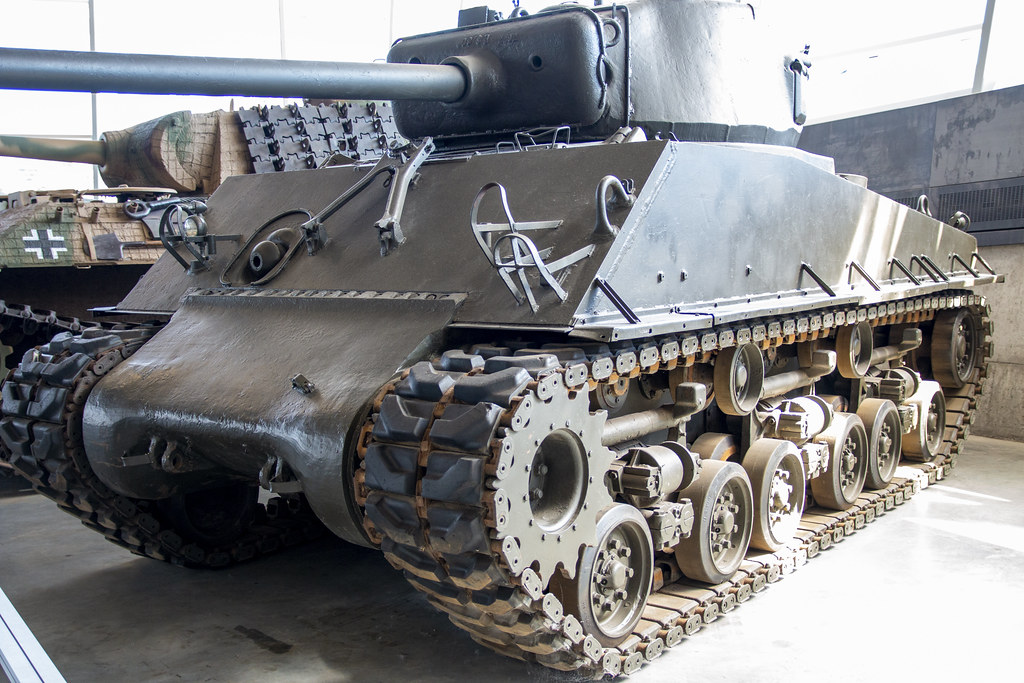
Image Credit: Jim Hoffman, CC BY-NC-SA 2.0 via Flickr



Comments are closed.