
This policy brief is part of a special series, directed by Laurent Borzillo (Forum de défense et stratégie, FDS), Teodora Morosanu (FDS), and Benjamin Boutin (Association France-Canada) with support from the Canadian Department of National Defence’s Mobilizing New Ideas in Defence and Security (MINDS) program, which aims to develop Franco-Canadian strategic exchanges.
Introduction
Climate change is making the Arctic more accessible, turning this region into a stage for strategic competition. More than ever, the Arctic is a theatre of interest for many non-Arctic states and actors aspiring for a greater role in Arctic affairs. In the North Atlantic, the security of undersea cables, maritime traffic, and the growing influence of Russia and China necessitate enhanced coordination with non-arctic actors. As North Atlantic Treaty Organisation (NATO) members with significant overseas territories and/or strategic interests, France and Canada have a strong incentive to deepen their cooperation with other less-obvious NATO allies, like Portugal.
Canada, France and Portugal are like-minded NATO allies that cooperate on Atlantic operations, equipment sharing and shared Alliance priorities. The March 2025 G7 Declaration on Maritime Security and Prosperity commits members and partners to closer coordination against risks posed by inadequately insured “dark” vessels, which threaten fragile ecosystems such as the Arctic, and supports expanded coast guard cooperation through forums such as the 2025 Global Coast Guard Forum and the Arctic Coast Guard Forum (Government of Canada, 2025a). In June 2025, Canada signed a Security and Defence Partnership with the European Union (EU), strengthening collaboration on maritime security, cybersecurity and counter-disinformation, while opening opportunities for Canadian industry into European defence joint-procurement initiatives such as Readiness 2030 (CBC News, 2025, and Government of Canada, 2025b). Canada further deepened ties with Portugal in September 2025 through a General Security of Information Agreement, enhancing defence cooperation (Government of Canada, 2025c), market access and the secure exchange of classified information, including defence intelligence and sensitive technical data.
How can Canada, France and Portugal help shape a stable, rules‑based maritime order as the Arctic and North Atlantic become increasingly interconnected?
In this strategic note, we illustrate how non-Arctic powers can become consequential Arctic stakeholders through alliance politics, trade networks, scientific cooperation, and shared legal and normative commitments. Their relationships are not incidental but strategically complementary since cooperation in the Arctic reinforces stability in the North Atlantic and supports the resilience of a rules-based maritime order that also governs Arctic waters. We thus demonstrate that the future of Arctic governance and security will increasingly be shaped not only by geography, but by networks of cooperation that link allies through shared strategic interests, norms, and vulnerabilities.
Climate change significance for Arctic and maritime routes
Climate change is a “threat multiplier” that intensifies social, economic, and political vulnerabilities (CNA, 2007; Rodrigues, 2025a, 2025b). This framing is salient in the Arctic, which is warming nearly four times faster than the global average, confirming Arrhenius’s 1896 scientific projections (Hendricks, 2018; Favier, 2019; Rodrigues, 2025a). The resulting environmental transformation is inseparable from geopolitical change: melting sea ice is opening new maritime routes and access to resources, while raising security concerns for regional and global actors. Scholars argue that ice itself has become securitized, as its loss threatens ecosystems, sea levels, and atmospheric stability (Kristensen & Mortensgaard, 2024). Since the 2007 CNA report and its 2014 update, climate change has been firmly embedded in security discourse, with Goodman identifying three key effects: the exacerbation of existing stressors, direct impacts on military operations, and the expansion of security agendas to include resilience and infrastructure protection (Goodman, 2024). This approach has been institutionalized by the EU (2008), the UN General Assembly (A/64/350), and NATO through its 2021 Climate Change and Security Action Plan and 2022 Strategic Concept, which identifies the Arctic as a critical region. Despite debates over militarization and calls for ecological security approaches, climate change is now broadly treated as a global security issue requiring coordinated international action (Rodrigues, 2025a).
Geographically defined as the region north of 66°33´N, the Arctic spans eight states (Canada, Russia, the United States via Alaska, Norway, Denmark via Greenland, Sweden, Finland and Iceland) and is home to approximately four million people, including Indigenous communities. It holds an estimated 13 percent of the world’s undiscovered oil and 30 percent of its untapped natural gas reserves. Accelerated warming has already led to the loss of over 40 percent of summer sea ice since 1979 (IPCC, 2021), increased methane emissions from thawing permafrost (NOAA, 2023), and growing risks to ecosystems, infrastructure, and Indigenous livelihoods, while simultaneously enabling new maritime routes (Rantanen et al., 2022).
The Arctic Ocean, formally recognized in 1921 by the International Hydrographic Organisation (Sörlin, 2017), acquires more strategic importance as these routes evolve. The Northwest Passage offers a shorter Atlantic–Pacific link but remains hazardous and politically sensitive (Royal Canadian Navy, 2023), while Atlantification is reducing the region’s historical isolation and deepening its geopolitical relevance (Sörlin, 2017; Rodrigues, 2025b). The Northern Sea Route along Russia’s Siberian coast can cut Europe–Asia transit times by up to 40 percent but is tightly regulated through permits and icebreaker requirements (Russian Arctic Strategy, 2020). A future Transpolar Sea Route may emerge by mid-century, posing significant environmental and governance challenges (Bennett, et al, 2020).
Together, these developments highlight the growing need for strengthened international regulatory cooperation, particularly under the United Nations Convention on the Law of the Sea (UNCLOS), to ensure that Arctic navigation evolves in a safe, secure, and sustainable manner.
Strategic Competition in the Arctic and the North Atlantic
Many countries increasingly view the Arctic Ocean through a security lens as sea ice recedes and transit routes like the Northern Sea Route and Northwest Passage become more accessible. These developments impact global shipping, resource extraction, and sovereignty claims. The Greenland–Iceland–UK (GIUK) gap, a Cold War chokepoint, is once again a focus for NATO surveillance and anti-submarine operations (Childs, 2022).
Bilateral cooperation between Canada and Russia, including Arctic matters, will remain difficult. In December 2022, Canada submitted an addendum to its Arctic Ocean extended continental shelf claim to counter Russia’s 2021 addendum, which had greatly expanded its claim and tripled the overlap with Canada’s shelf (Royal Canadian Navy, 2023). Canada’s submission rebalanced this overlap. Canada remains committed to resolving continental shelf disputes peacefully and in line with international law.
Russia poses a significant geopolitical challenge in the Arctic. It controls 50% of the region geographically (Royal Canadian Navy, 2023) and has intensified both its military and economic activities. In 2020, Russia launched a $300 billion initiative to accelerate the development of its Arctic region, focusing on new ports, industrial infrastructure, and oil and gas projects. This economic strategy is closely aligned with a parallel military build-up, including the modernization of the Northern Fleet, the expansion of Arctic bases, and increased deployment of conventional and nuclear capabilities. Western sanctions have deepened Russia’s dependence on China, which declared itself a “near-Arctic state” in 2018. In reality, Beijing is situated approximately 5,580km from the North Pole, but only 4,420km from the Equator (Zellen, 2019). These figures suggest that China is, by geography, closer to being a near-Equatorial state than a near-Arctic one. China is now a key partner in Arctic research, energy development, port construction, and critical infrastructure within Russia’s Arctic zone, notably Arctic shipping lanes and resource development (Byers, 2013). This cooperation now extends to military activities, including joint exercises in the Russian High North, building on a 2022 bilateral commitment to Arctic cooperation.
Climate change is focusing attention on the Arctic as a sustainable and reliable source of critical minerals, such as lithium, graphite, nickel, cobalt, copper, and rare earth elements, that are vital for the transition to a low-carbon economy. Additionally, research indicates (NASA, 2025) that as temperatures rise in southern oceans, global fish stocks are migrating toward the Arctic Ocean, creating significant challenges for global food security. In 2022, the Russian state-owned oil company Rosneft announced a significant oil discovery in the Pechora Sea, located within Russia´s Arctic territorial waters. The find occurred in the Medynsko-Varandeyskoye license area, where Rosneft had previously conducted exploratory drilling. The newly identified reserves are estimated to contain approximately 82 million tons of oil (Nilson, 2022).
The growing Sino-Russian alignment (Rodrigues, 2026a) introduces new risks for Arctic governance, freedom of navigation, and regional stability. As a result, non-Arctic partners with maritime and geopolitical stakes, such as Portugal, are becoming increasingly relevant to the broader Arctic–Atlantic security architecture.
Looking ahead, states must invest in new partnerships and strengthen existing ones to reinforce the strategic resilience of the Arctic. Canada and France both advocate for the non-militarization of the Arctic and uphold the authority of multilateral institutions such as the Arctic Council and the International Maritime Organization. Their cooperation is reinforced through the Franco-Canadian Defence Cooperation Council (FCDCC), and both countries remain committed to multilateral governance under the Arctic Council, UNCLOS and the Paris Agreement.
Canada and France should identify additional forums and make innovative use of current mechanisms to advance Arctic dialogue and cooperation, with the goal of balancing and limiting the growing influence of Russia and China in the region.
The security connection between the North Atlantic and Arctic basins
Recent strategic and academic assessments conceptualise the North Atlantic and the Arctic as a continuous and interdependent geostrategic space, rather than distinct maritime regions (Rodrigues, 2026b). This shift is driven by environmental transformation, evolving maritime routes, and intensifying geopolitical competition. The integration of the Arctic into the North Atlantic system produces several key implications in different sectors.
First, economic and logistical transformations are underway. Arctic routes can reduce transit distances between Europe and Asia by up to 30–40%, thereby reshaping global shipping patterns and reinforcing the Atlantic’s role as a gateway to emerging polar routes, which still provide some challenges in terms of navigation. This means that non-arctic states have now the opportunity to improve their abilities and be a part of the new geopolitical context being designed.
Second, security interdependence has intensified. Threats originating in the Arctic, such as militarisation, submarine activity, or hybrid operations, can directly affect North Atlantic infrastructure, including critical subsea communication cables. This creates a shared vulnerability space across both basins.
Third, the region reflects increasing geopolitical continuity and competition. The Arctic–Atlantic system is now characterized by great power rivalry, particularly involving Russia, whose strategic posture explicitly spans both regions.
Finally, these developments necessitate enhanced multilateral cooperation, including coordination between regional governance mechanisms such as Arctic and North Atlantic coast guard frameworks (Rodrigues, 2026b).
Maritime security in the 21st century for Canada and many of its allies is thus shaped by the functional integration of the North Atlantic and Arctic basins, which together form a continuous and evolving security environment. Traditionally treated as distinct regions, these maritime spaces are now better understood as a single operational theatre, where risks, threats, and governance challenges transcend geographic boundaries. North Atlantic also means the Azores, a Portuguese archipelago located in the mid-Atlantic, that represent a multifaceted strategic asset whose importance extends across geopolitical, economic, environmental, and scientific domains. Their central location in the North Atlantic positions them as a critical node in global maritime networks, while their vast maritime domain supports economic development and resource management.
The significance of the Azores is changing in light of the ongoing global and geopolitical transformations. From its role in maritime security and defence to their contributions to the blue economy and scientific research, the archipelago is integral to Portugal’s strategic identity. In an era defined by interconnectedness and environmental challenges, the Azores offer both opportunities and responsibilities. A comprehensive and forward-looking maritime strategy is essential to fully harness their potential and ensure their continued relevance in the global arena (Rodrigues, 2025c).The Azores, more specifically Lajes Base, have also gained renewed importance as a logistical and monitoring hub (Borges, 2026). Their position allows for the observation and management of increased maritime traffic between the Atlantic and Arctic, thus enhancing Portugal’s potential role in international governance and cooperation in these regions.
Canada’s Arctic Priorities
Canada is one of eight circumpolar states, with the Arctic covering 40% of its land and over 70% of its coastline (Government of Canada, 2025d). The region is vital to Canada’s identity, security, and economic interests. As a founding member of the Arctic Council, Canada plays a leading role in Arctic governance and cooperation.
Canada’s priorities centre on implementing the 2019 Arctic and Northern Policy Framework and the 2024 Arctic Foreign Policy, both of which emphasize sovereignty, Indigenous partnership, scientific leadership and pragmatic diplomacy. These priorities include positioning Canada as a global leader in Arctic science, strengthening multilateral cooperation, expanding trade and commercial opportunities for northern communities and deepening engagement with Indigenous Peoples. Key initiatives include appointing an Arctic ambassador, opening new consulates in Alaska and Greenland, launching Arctic security dialogues and advancing boundary negotiations.
In line with the 2022 NORAD modernization effort, Canada is also reinforcing its Arctic defence posture by expanding Canadian Armed Forces capabilities and operations. This includes strengthening the Canadian Rangers, who play a central role in asserting sovereignty. Defence spending is expected to nearly triple by 2030 in response to rising geopolitical pressures. Canada continues to advance its extended continental shelf claims through UNCLOS processes and remains committed to multilateral governance through the Arctic Council and the International Maritime Organization (Rodrigues and Azodi, 2026).
Canada’s scientific leadership is anchored by Polar Knowledge Canada and the Canadian High Arctic Research Station in Nunavut. These institutions integrate Indigenous knowledge with multidisciplinary research to support adaptation and resilience. Polar Knowledge Canada leads national Arctic research by coordinating scientific programs, collaborating with northern communities and training the next generation of polar researchers, with a particular focus on northern youth.
France’s Polar Engagement
France, though not an Arctic state, has a robust Arctic policy and a long tradition of polar science. It considers itself a polar nation. Since 1963, France has asserted its scientific presence in the Arctic by establishing a research base in Svalbard, now jointly operated with Germany in the international research village of Ny-Ålesund. It also maintains the Jean Corbel station, dedicated to research in atmospheric physico-chemistry and glaciology (French Ministry of Armies, n.d.).
An observer member of the Arctic Council since 2000, France leverages this regional cooperation forum to strengthen its science diplomacy. It contributed to the structuring of polar research through the launch of the Arctic Scientific Observatory in 2010, which coordinates around 400 researchers across Earth sciences, environmental sciences, and the social sciences. All polar infrastructure and logistics are managed by the French Polar Institute Paul-Émile Victor (IPEV), which ensures France’s operational presence in polar regions (French Ministry of Armies, n.d).
In the Atlantic and Arctic, France’s 2025 Arctic Security Strategy underscores the strategic link between the North Atlantic and the Arctic and reaffirms its commitment to cooperation and maritime security (Rodrigues, 2026c). This is reinforced by the 2030 Polar Strategy, France’s first comprehensive roadmap for the polar regions, launched in April 2022. Led by the CIMER-POLES interministerial committee, the strategy aims to triple Arctic research resources, establish a new research base in Greenland, commission a new polar oceanographic vessel, strengthen France’s role in Arctic governance bodies, create a French polar foundation and promote Saint-Pierre-et-Miquelon as a scientific platform. The proposed polar programming law and the One Polar Summit in 2023 are both key steps in advancing these ambitions.
Portugal’s Atlantic Gateway Role
Portugal occupies a strategic position at the crossroads of the North Atlantic, linking Europe to the Americas and Africa. Its mainland coastline, combined with the Azores and Madeira archipelagos, places Portugal astride critical maritime routes, air corridors, and undersea cable networks that are essential to global trade, communications, and military mobility. Although Portugal is not an Arctic state and thus not a member of the Arctic Council, its Atlantic geography and maritime orientation give it an indirect but increasingly relevant stake in Arctic-linked maritime dynamics.
Historically shaped by its maritime empire and Atlantic identity, Portugal has retained significant naval expertise, port infrastructure, and ocean governance capacity. As a founding member of NATO and an EU member since 1986, Portugal plays a central role in Alliance maritime surveillance, anti-submarine warfare, and sea line of communication protection in the North Atlantic. The Azores, in particular, remain strategically significant as a logistical and monitoring hub between North America and Europe, reinforcing NATO´s ability to secure transatlantic reinforcement routes that are increasingly connected to Arctic and High North security (Rodrigues, 2025b; 2025c; 2025d).
From a strategic perspective, Portugal functions as an Atlantic gateway for emerging Arctic routes. As climate change progressively alters navigation patterns, potential future traffic from the Arctic, whether via the Northern Sea Route or a future Transpolar Sea Route, will ultimately converge toward North Atlantic ports and infrastructure. Portugal´s ports and maritime services are therefore positioned to benefit from, and contribute to, the resilience of Arctic-linked commercial flows, even in the absence of direct Arctic access. This gateway role also extends to the protection of critical undersea infrastructure, including energy pipelines and data cables, which are increasingly recognized as strategic vulnerabilities in both the North Atlantic and Arctic security environments.
Portugal´s relevance further derives from its role within the European Union. Through EU maritime security initiatives, ocean governance frameworks, and research programmes, Portugal contributes to shaping European engagement with the Arctic indirectly, particularly on issues of maritime safety, environmental protection, and sustainable fisheries. Although Portugal does not yet have a dedicated national Arctic policy, it has demonstrated growing interest in polar research, ocean science, and climate governance. Portuguese science is in the Arctic, though lacking diplomatic presence as well as recognition in official documents (Rodrigues, 2025c; 2025d; 2025e).
Overall, Portugal exemplifies how a non-Arctic European state can exercise strategic relevance in Arctic affairs through its Atlantic positioning (specifically the Azores Islands), NATO and EU commitments, maritime infrastructure, and inter-oceanic connectivity. Acting as a stabilizing gateway between the Arctic and lower latitudes, the country reinforces the resilience of transatlantic and Arctic-linked maritime systems while supporting a multilateral, law-based order at sea. Its role complements those of Canada and France, underscoring the broader argument that Arctic governance and security are increasingly shaped by interconnected networks of non-Arctic powers operating across the Atlantic world.
Comparatively, Portugal’s role complements those of Canada and France within a differentiated but coherent Atlantic–Arctic security architecture. While Canada provides territorial sovereignty and operational presence in the Arctic, and France projects strategic continuity across the Arctic and the Atlantic through its global naval posture, Portugal reinforces the southern Atlantic anchor of this system. Through NATO maritime surveillance, protection of sea lines of communication, and undersea infrastructure security, Portugal helps ensure the resilience of the transatlantic link that underpins Arctic deterrence and reinforcement. The Brilliant Shiel Operation had this purpose, to use the capacities of southern allies, Portugal, such as a traditional submarine, confirming it is possible to be under icy waters. This mission was held from April to July 2024 and successfully conducted by the Portuguese Navy. Together, these three states illustrate how geographically distinct but functionally interconnected actors contribute to Arctic stability by securing different segments of an integrated maritime space, linking the High North to the broader Atlantic.
Conclusion and Recommendations
A strategic logic connects Canada, France, and Portugal. Canada anchors the Arctic dimension as a circumpolar state responsible for sovereignty, governance, and scientific leadership in the Northwest Passage. France operates as a global maritime power that structurally links the Arctic and the North Atlantic through its overseas territories, naval deployments, and polar diplomacy. Portugal, positioned at the crossroads of the North Atlantic, functions as a critical gateway for maritime security, undersea infrastructure protection, and Atlantic connectivity within NATO and the EU.
The emerging routes hold promises for shorter global shipping paths, yet pose major challenges, including infrastructure gaps, environmental risk, and the need for international governance to manage safety and sovereignty issues. The Arctic Ocean is already regulated by an extensive legal framework, most notably the United Nations Convention on the Law of the Sea (UNCLOS), which defines states´ jurisdictions, rights, and obligations across different maritime zones. These rules cover the delimitation of continental shelf boundaries, navigation, natural resource management, marine environmental protection, and other uses of the sea. All states have rights and responsibilities regarding ocean use that apply equally in the Arctic. For example, under UNCLOS, non-Arctic countries may only conduct marine scientific research in another state´s exclusive economic zone (EEZ) with that state’s consent.
As the maritime order evolves in the face of climate change, power competition, and legal contestation, Canada, France, and Portugal play increasingly important and complementary roles. They share commitments to multilateralism, international law, and maritime stability. Their cooperation spans NATO, the EU, the UN, and the Arctic Council (where applicable). Together, they contribute complementary strengths:
- Canada ensures Arctic operations along the Northwest Passage and scientific leadership;
- France bridges the Arctic and North-Atlantic through defence diplomacy and polar research;
- Portugal fortifies the North Atlantic – Arctic security via submarine patrols, maritime infrastructure protection, and regional defence research and serves as a pivotal point for Atlantic connectivity within Europe through the Azores.
Collectively, they exemplify how Arctic-connected oceanic dynamics converge with oceanic links to influence strategic maritime security alliances and posture.
Whether through NATO operations in the North Atlantic, scientific diplomacy in the Arctic, these states exemplify how medium powers can anchor stability and cooperation across multiple maritime domains. Building deeper trilateral and quadrilateral partnerships among them will be essential to navigating an era of uncertainty at sea.
By working collaboratively and inclusively, these states can help uphold the rule of law at sea, mitigate climate threats, and defuse geopolitical tensions, while strengthening their own maritime security and prosperity in the process.
The analysis demonstrates that geography alone no longer determines relevance in Arctic affairs. Instead, connectivity, legal alignment, and coalition-building shape influence. Canada, France, and Portugal collectively show that non-Arctic engagement is neither opportunistic nor destabilizing when grounded in multilateralism and international law. Canada provides Arctic legitimacy and governance leadership; France ensures strategic continuity across oceanic theatres; and Portugal secures Atlantic gateways and critical infrastructure
The strategic note answers the guiding question by showing that the engagement of non-Arctic powers is not only possible but necessary for maintaining a stable maritime order across interconnected basins. These states act as strategic connectors: they dilute great-power polarization, reinforce legal regimes, and enhance resilience across supply chains and security architectures.
In this context, the recommendations presented below aim to reinforce multilateralism and cooperation among the four countries discussed, with the potential to promote stability, reduce tensions, and foster positive outcomes in the Arctic region.
- Establish a Multilateral MDA Network;
- Deepen Climate-Ocean Security Cooperation via working groups;
- Build Inclusive and Indigenous Maritime Governance Models
- Collaborate within the EU, NATO, and UN agencies to develop frameworks for inter-regional maritime governance.
Ultimately, the Arctic’s future will be shaped as much by inclusive networks as by polar geography. By engaging non-Arctic (small and medium) powers through NATO, the EU, UNCLOS-based institutions, and scientific diplomacy, Canada, France, and Portugal, illustrate a model of cooperative maritime governance capable of mitigating competition while adapting to climate-driven change.
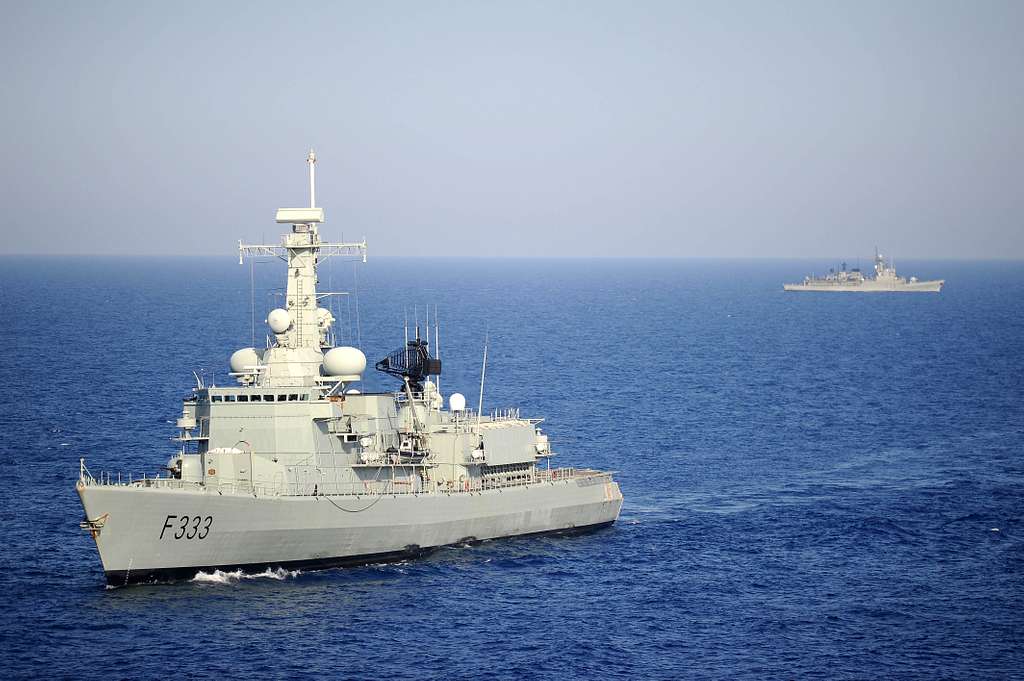
Image Credit: U.S. Navy photo by Mass Communication Specialist 2nd Class Jimmy C. Pan.


Comments are closed.