This policy brief is part of a special series, directed by Laurent Borzillo (Forum de défense et stratégie, FDS), Teodora Morosanu (FDS), and Benjamin Boutin (Association France-Canada) with support from the Canadian Department of National Defence’s Mobilizing New Ideas in Defence and Security (MINDS) program, which aims to develop Franco-Canadian strategic exchanges.
Introduction
At the NATO Hague Summit in June 2025, Canada committed to increasing its defence spending to 2% of Gross Domestic Product (GDP) by spring 2026 – achieved in March 2026 – with a longer-term objective of reaching 5% GDP by 2035. This marked a historical shift in Canada’s global defence posture.
In the words of Prime Minister Mark Carney, “the world order is currently undergoing a period of rupture. We are witnessing not only the emergence of new threats, but also the convergence of major trends that are forcing Canada to fundamentally rethink its strategic posture.” The consequences of climate change, particularly in the Arctic, and significant technological advances – from cyberspace to artificial intelligence and hypersonic missiles – have changed the game. Nevertheless, the drastic changes in US foreign policy, combined with President Trump’s unpredictable and transactional approach, are unfolding against the backdrop of a more competitive international environment, where rivalries between major powers are intensifying, and threats are becoming more diverse.
These changes have deeply shaken Canadians’ sense of security and have made them much more aware of defence issues and the need for investment in Canada’s defence. However, awareness alone will not sustain support. Maintaining public trust requires a more meaningful approach to engagement, one that builds understanding of defence priorities through clear communication, transparency, and sustained outreach.
As Canada expands its defence ambitions, aligning policy with public understanding will be essential. An informed and engaged public is more likely to support the long-term investments – $33.5 billion per year in cash expenditures over the next 10 years – needed to meet NATO’s spending target set at the 2025 Hague Summit.
Shared Projects and Relationship Building
Sustaining public engagement on Canada’s security and defence priorities requires long-term participation through shared projects and partnerships. The current geopolitical context is marked by shifting trade dynamics and increasingly volatile geopolitical conditions. Canada is renewing its international partnerships, particularly with Europe and Asia. Strategic alignment is no longer optional: as a middle power, Canada must prioritize targeted and effective alliances to advance its security and economic interests. Notably, Canada’s deeper engagement with European partners – notably as Canada being the first and only non-European to join the European Union’s Security Action for Europe (SAFE) Agreement – has brought defence policy closer to the forefront of national conversation and increased public awareness of national security risks.
Joint initiatives with European partners also offer a practical avenue to connect defence policy with civil society. Collaborative efforts in areas such as cybersecurity, where Canada already plays a role through the G7 Rapid Response Mechanism and the Canadian Armed Forces’ cyber capabilities, can be expanded to involve universities, the private sector, and research institutions. Supporting existing expertise, investing in emerging research, and developing talent pipelines will help shift Canada’s posture from reactive to proactive. These initiatives make security challenges more tangible, foster innovation, and contribute to a more informed and engaged public.
The National Security & Defence Dialogues led by the Conference of Defence Associations Institute provide a scalable model for this approach. Designed as a cross-country series of locally grounded engagements, these dialogues bring discussions beyond the National Capital Region into communities across Canada. By convening local stakeholders, including defence officials, industry representatives, academics, Indigenous leaders, and community members, they create space for informed, two-way exchanges on the security challenges facing Canada and the implications of increased defence investment. This model is particularly effective because it anchors national security discussions in regional realities. Dialogues planned in locations such as Yellowknife, Vancouver, and Whitehorse highlight issues including Arctic sovereignty, northern security, and community resilience, while ensuring Indigenous perspectives are meaningfully integrated. This inclusive approach moves beyond consultation toward active participation, strengthening the legitimacy and relevance of defence policy.
Community-based defence assets also play an important role in sustaining engagement. The Canadian Rangers, particularly in the North, contribute directly to sovereignty, surveillance, and emergency response, while maintaining deep ties to local communities. Their role provides a tangible link between national defence priorities and everyday security realities. Strengthening support, visibility, and engagement with the Rangers, including through dialogue platforms and public recognition, can reinforce public understanding of Canada’s security challenges and foster a stronger sense of shared responsibility.
Such engagement initiatives strengthen public literacy, build trust in defence institutions, and foster a sense of shared responsibility. By creating recurring, community-based forums and linking them to broader strategic objectives, Canada can sustain interest in defence issues over the long term while ensuring that public engagement remains inclusive, regionally grounded, and connected to real policy outcomes.
Public Communication and Transparency
Intentional and Proactive Public Communication
Strengthening Canada’s security culture requires greater transparency. Increasing openness with civil society and allies would help build trust and support. Strategically declassifying carefully selected information to share could accomplish this. For example, updates on operations like Operation Reassurance could highlight the readiness and reliability of NATO forces stationed in Eastern Europe. By showcasing strengths and successes, a sense of pride could emerge among military personnel and civil society. Transparency about funding allocation would foster public understanding of its impact on national and international security, enhancing the legitimacy of defence spending. Sharing specific achievements (joint NATO exercises and community engagement initiatives) could build trust and cooperation with local populations and with missions that have not been considered successes, and could also provide lessons learned to avoid repeating them and demonstrate accountability. Such narratives and operational insights would bolster public support, encourage ongoing initiatives, and secure funding for security efforts.
Digital Creators Promoting Global Security
Just as social media platforms can perpetuate disinformation, effectively leveraging these digital spaces also offers opportunities for strategic communication, global engagement, and countering disinformation. As political creators mobilize online, they can foster continued democratic discourse and contribute to a more informed, connected, and empowered global community. They can also help maintain momentum for the current interest in international security topics that have risen since the last federal election, amid tariffs and presidential rhetoric regarding the annexation of Canada.
Here is a critical question: If Canada does not promote its own defence and security stories, who will? What one calls propaganda, another may see as strategic communication, especially in times of insecurity and escalating threats to national and international security. With concerns about Canada’s sovereignty and role on the global stage, Canada must shape its own strategic narratives, or others will shape it for Canada. The importance of strategic communication can be seen in the case of the Sekanku/Diaoyu Islands, where Japan, China, and Korea have employed various types of strategic communication to further their respective regional and resource security interests.
Digital platforms and creators have a profound influence on public discourse and improve media literacy. Select content creators are stepping up as advocates for democracy and sharing information on collective security. In the Czech Republic, Johanna Bazlerova launched Jsme v obraze, a project that shares updates on NATO and the EU while engaging with their platforms. Bazlerova’s reach now spans 198,000 Instagram followers. Supporting leaders like Bazlerova through grants or programs can empower younger, politically engaged creators. Providing resources and flexible support would enable creators to produce impactful content, improve media literacy on security topics, and strengthen public resilience against misinformation.
Programs such as Protect the Future, in which youth and young content creators explore NATO’s role in international security and defence. This initiative takes creators behind the scenes and to the experts to find out what NATO does. It gives young people a voice to share their perspectives on NATO and its work in their own, uncensored way. While this program is valuable, a notable gap remains in ensuring the sustainability of political content creators’ evolving role in this field. Many creators must balance full-time jobs with developing, producing, and sharing their stories and insights. These grants would not involve any exchange for specific coverage or framing of challenges in the international security landscape.
Leveraging Arts for International Security
Leveraging the arts can unite communities and promote a shared responsibility for security. The prominent One World Film Festival in the Czech Republic showcases global human rights issues through film, sparking dialogue and raising awareness. Its model offers inspiration for Canada and non-profits to partner with One World or to launch similar initiatives in the security and defence sector. Combining storytelling, documentaries, lectures, grassroots organizing, and inclusive programming can foster cultural exchange and amplify public engagement on security issues that affect human rights.
Art transcends culture and borders, making it a powerful tool for security advocacy. Stand-up comedy can engage audiences in various ways, such as blending humour with serious themes. Many comedians use their platforms to comment on social, political and historical events, breaking down complex geopolitical issues into comical insights. Comedy can raise awareness of defence and security issues and encourage audiences to think critically and stay informed about the world around them. Some comedians who already engage in political comedy include Rick Mercer, Sophie Buddle, Faris Hytiaa, Brad Semotiuk, Sammy Obeid, Dragos, and Victor .
Curating a themed grant, such as one that could support producing a comedy tour or show centred on geopolitics could be an innovative way to educate the public on international security, inviting everyday people, academics, and professionals in the field to attend. This would be a publicly funded and arm’s legnth initiative. This funding would support comedians who already engage in these topics and amplify their work and opportunities without imposing constraints. Comedy, after all, thrives on authenticity. This project encourages artists to engage with these topics, helping sustain public engagement with these topics. For instance, Rick Mercer toured across Canada on the Stand-Up For Canada tour, featuring various Canadian comedians performing political comedy bits. This tour was a huge success, socializing attendees to Canadian politics. It is now available for free on CBC Gem, accessible to people across the country.
Conclusion
Canada’s evolving defence landscape requires strategic partnerships that sustain long-term public engagement on national security and defence priorities through shared projects, collaborative initiatives, and enduring partnerships—while also fostering a broader culture of engagement, transparency, and shared responsibility in advancing Canada’s role in international security and defence. As the global security environment grows more complex, fostering and maintaining public understanding through intentional communication, creative initiatives, and inclusive community programs is essential. By connecting policy to people, whether through dialogue, digital creators, or the arts, Canada can build sustained public support and resilience. This approach will ensure that defence priorities remain responsive and aligned with the values and interests of Canada and its allies, securing both the country’s security and its role on the world stage.
Recommendations:
- Develop and diversify shared projects and strengthen relationship building.
- Provide flexible support for political creators to produce impactful content, boost media literacy on security, and build public resilience.
- Curate a comedy tour or show on geopolitics to increase public engagement on topics of international security and launch a film festival dedicated to topics of defence and security topics.
About the Authors
Gabrielle Andrychuk (she/her) is a senior policy advisor and editor with a master’s in international security studies and a Bachelor of Arts in Political Science and Sociology. With a strong foundation in international politics, she is passionate about research, policy analysis, and strategic planning. Gabrielle is also dedicated to fostering inclusive and collaborative environments. In her spare time, she enjoys volunteering, language exchanges, and playing tennis.
Emmylou Sergent is Director of Strategic Accompaniment at ADIT North America, a risk-advisory firm specializing in economic intelligence and business diplomacy. She previously served as Coordinator of events at the Conference of Defence Associations (CDA) Institute in Ottawa, where she managed national defence conferences and led the National Security & Defence Dialogues. She completed an internship at the Assemblée nationale in Paris within the Cooperation and Bilateral issues branch, where she prepared foreign policy briefings and supported the coordination of the France-Canada and France-Québec parliamentary friendship groups. She holds a master’s degree in international relations from the Université de Montréal, with a thesis on France’s Indo-Pacific strategy. She is an analyst with the Young Researchers Programme at the Institute for Applied Geopolitical Studies (IEGA), a member of the Strategic Analysis Network (RAS), and an alumna of the France-Canada Future Leaders Programme.
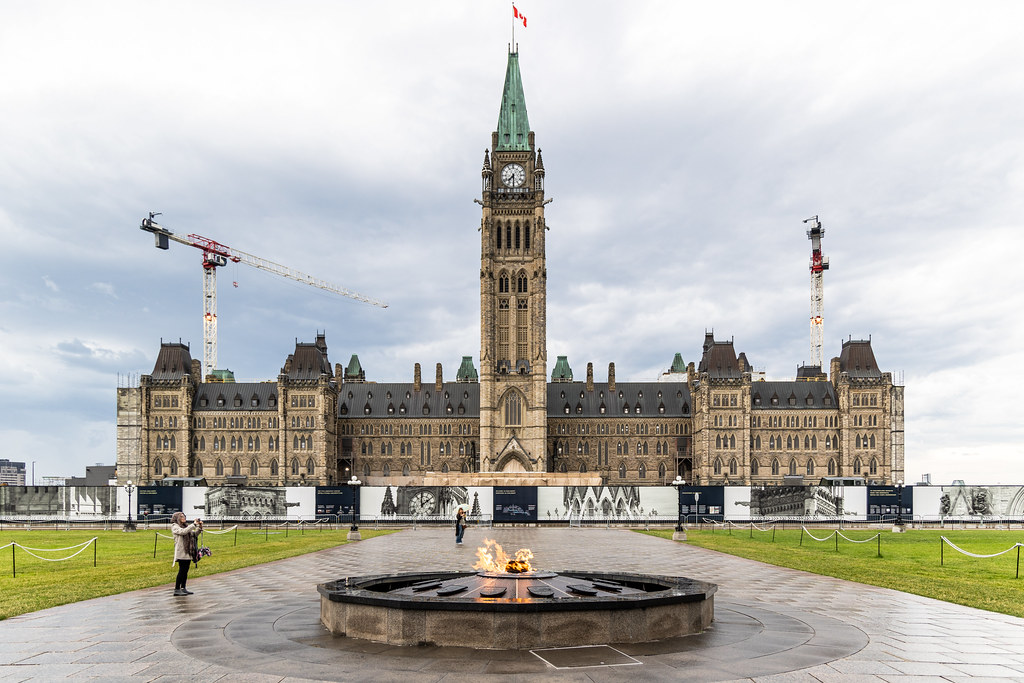
Image Credit: Billy Wilson via Flickr, CC BY-NC 2.0.



Comments are closed.