This brief is part of the Strategic Analysis Network’ special Back to the Future essay series, which was financed through a grant from the Department of National Defence’s MINDS program.
Introduction
Our Operation Unified Protector (OUP) study published in the Journal of Strategic Studies, along with subsequent research, revealed important features of NATO alliance politics, especially as it pertains to Canada’s interactions with bigger players within NATO. Based on original interviews with Canadian and NATO officials, we concluded that two key features drove Canada’s influence in 2011. The first was a visible, low‑caveat, top tier contribution. Canada, in particular, was part of the ‘striker group’, the small group of countries doing the bulk of the sorties. Second, a Canadian officer, Lieutenant-General Charles Bouchard, commanded OUP, allowing Ottawa to shape the campaign’s day‑to‑day legal and targeting posture. For OUP, even as the big strategic calls stayed with Washington, and to a lesser extent London and Paris, Canada was the primary interlocutor with the big three, thus placing Canada above the other contributing allies in terms of access to information and having a hand in mission design and execution throughout the operation.
Though we find that Canada can maximize its visibility and influence when it shows up as a contributor to military operations, we acknowledge that these benefits are ephemeral. Fast forward to the present, we can see how such dynamics have grown more complex. With President Trump’s second term and Secretary Pete Hegseth’s vision for a more lethal Department of “War”, the terms of alliance politics are being re-shaped by the Trump Administration’s profound disdain for multilateralism, which results in a more transactional burden‑sharing. As dramatic as some of the changes since 2025 appear, OUP offers important lessons about contemporary alliance politics because the United States was already eager to lead from behind then, urging other allies to do more, despite their continued dependence on American military capabilities.
In our contribution to the ‘Back to the Future’ essay series, we argue that these recent shifts do not negate the lessons from OUP; rather, they amplify them. In 2011, Canada earned operational influence through strikes, caveat‑free rules of engagement, and command access, even as strategic direction sat with the big three. That bar is even higher now: influence now tracks deliverable combat power, stockpiles, and production lines and how quickly these can support NATO plans.
Context: Libya and OUP
In early 2011, as the Arab uprisings spread across the region, mass protests erupted in Libya against the regime of Muammar Qadhafi, in power since 1969. The government responded with escalating violence. On 26 February, the UN Security Council (UNSC) adopted Resolution 1970, demanding that Libya address protesters’ grievances while imposing sanctions, an asset freeze, a travel ban on senior officials, and an arms embargo. The next day, opposition figures formed the National Transitional Council (NTC), though it soon became evident that the NTC lacked control over the numerous militias emerging across Libya.
As violence intensified, the United States, France, the United Kingdom, and other partners accelerated their contingency planning. On 10 March, U.S. Secretary of Defense Robert Gates indicated that any American military role required new United Nations (UN) authorization. On 17 March, the Security Council adopted Resolution 1973, permitting states to take “all necessary measures” to protect civilians, excluding occupation. Two days later, a coalition including the United States, France, and the United Kingdom launched airstrikes under Operation Odyssey Dawn, halting Qadhafi’s assaults on rebel areas and destroying much of Libya’s air defenses and heavy weaponry. NATO, despite internal disagreements and reluctance from some members such as Germany, agreed on 23–24 March to enforce the arms embargo and no-fly zone. On 31 March, NATO took over the mission, now named Operation Unified Protector (OUP). The mission’s goals were to end attacks on civilians, withdraw regime forces to barracks, and secure humanitarian access.
Canada’s contribution, Operation Mobile, included seven CF-18 fighters, surveillance and refueling aircraft, and the frigate HMCS Vancouver, totaling about 630 personnel. Canadian aircraft flew roughly 6% of all NATO sorties and 9% of strike sorties, operating with comparatively permissive rules of engagement; the naval contingent conducted hundreds of hailings to enforce the embargo. Prime Minister Stephen Harper categorically refused to deploy ground troops.
OUP failed to meet its initial 90-day mandate and was extended on 1 June amid a battlefield stalemate. Momentum shifted in August when rebels captured Tripoli, and on 20 October they killed Qadhafi. The UNSC ended authorization for the use of force with Resolution 2016, effective 27 October 2011.
Development: Canada and OUP
Though Harper’s government framed Canada’s involvement in NATO’s Operation Unified Protector (OUP) in value-based terms, pointing to freedom, democracy, and moral obligation, such framing served more as a narrative than as genuine decision-making drivers. Harper sought to shift Canada’s international image from that of a traditional peacekeeper to a more assertive military actor, portraying Qaddafi as a threat to global norms. Public statements and parliamentary motions emphasized protecting civilians and supporting Libya’s democratic transition, aligning with allied messaging. The concept of Responsibility to Protect (R2P) influenced international discourse, but Canadian officials avoided using the term publicly because of its perceived association with the Liberal Party, despite echoing its basic principles in justifying intervention. In explaining Canada’s decision to join multinational coalitions, the scholarly literature we reviewed tends to emphasize factors such as party ideology, electoral concerns, commercial interests, and threat perception. However, we found that these factors were not decisive for OUP. Instead, Canada’s involvement was primarily driven by the desire to maintain its reputation as a reliable NATO ally, especially in the eyes of Washington, rather than by direct national interests in Libya.[1]
Unlike European NATO members, Canada had no significant stakes in Libya. The dominant concern was avoiding marginalization if the United States, France, and the United Kingdom acted outside NATO. As our interviews revealed, debates within government emphasized “burnishing credentials” and ensuring Canada was seen as “punching above its weight.” The government actively promoted NATO’s role and highlighted Canada’s leadership contributions, such as its air and maritime operations and the appointment of Lieutenant-General Charles Bouchard as mission commander. Officials described the intervention as discretionary and primarily about being a “good ally”. While public messaging focused on humanitarian and security rationales, speeches and testimonies openly referenced strengthening relations with allies, which we have dubbed the friendship motive.
Our case study analysis also showed that Canada’s participation in OUP yielded some operational and reputational benefits, but these were limited and short-lived, with little strategic influence beyond the mission’s end. The most visible gain was the appointment of Bouchard as NATO commander, which enhanced Canada’s profile and allowed Canadian officers and analysts to occupy key positions at NATO’s operational headquarters, improving access to information, as well as mission design and execution debates. Bouchard’s autonomy in shaping the Operations Planning Directive and early mission design gave Canada influence over legal and targeting aspects, while its active participation in air and maritime operations (flying six percent of all sorties and nine percent of strike sorties) secured Canada a place in the informal “striker group,” which handled operational decisions. Its rules of engagement were among the least restrictive within the Alliance, thereby increasing operational flexibility and credibility.
These advantages were constrained, however. Canada’s influence remained operational rather than strategic; major decisions, such as the timing of the mission’s termination, were dominated by larger powers. Canada lacked key assets, which limited its ability to shape outcomes and diminished its reputational gains. Canada’s leadership role and contributions temporarily elevated its standing within NATO, but these benefits did not translate into lasting influence after the mission concluded in October 2011.
Policy Considerations: What’s changed since 2011, and why OUP’s lessons matter
Secretary Hegseth’s confirmation in January 2025 marked a decisive shift toward a more transactional, “pay-to-play” NATO. His early tenure brought blunt demands for European primacy in continental defence, a path toward allocating 5% of GDP to defence and security, and a doctrine that placed hard power above all else. This approach reframed the “friendship motive,” which we define as the desire to be seen as a reliable ally, into a model where influence follows tangible deliverables: capability, readiness, and industrial output, all accompanied by overt praise for President Trump, or what we might call demonstrations of absolute loyalty.
The Libya intervention had already exposed critical capability shortfalls among NATO allies, particularly their dependence on U.S. intelligence, surveillance, and reconnaissance assets. Though Washington has long urged allies to spend more on defence, enforcement was historically lax. By 2025, however, the bar is significantly higher. At the June NATO Summit in The Hague, allies endorsed an ambitious target of 5% of GDP for defence by 2035, with at least 3.5% dedicated to core military capabilities and roughly 1.5% to resilience and defence-related infrastructure. They also committed to annual national plans demonstrating credible pathways to meet these goals, transforming political rhetoric into more enforceable planning requirements subject to audits in Brussels. At the Summit, this move was framed as a decisive response to Russia and a guarantee of continued U.S. engagement under a Trump administration.
The political message from Washington is clear: spend more, and spend on the right things, or risk losing standing within the Alliance. If Canada were to develop a playbook for how to engage in this evolving NATO environment, drawing lessons from its experience in Libya, then it would not only need to make visible contributions that reinforce its reputation as a reliable and capable ally, but prioritize capability development through credible spending commitments in parallel. In other words, the strategy which worked in the past whereby Canada could compensate for underinvesting in defence by making contributions to NATO military operations is over. With these new conditions in mind, we derive six key lessons from OUP that can inform how Canada might best navigate tougher alliance politics.
1. Buy Influence the OUP Way: Low Caveats, High-Value Enablers
Operation Unified Protector demonstrated that Canada’s low-caveat CF-18 deployments and visible maritime role secured a seat in the striker group and shaped legal and targeting practices. Canada learned that showing up with the right equipment and platforms delivers access and influence, but doing so requires more systematic planning and integration of past lessons into force development, which is still lacking within the CAF. Adapting this lesson today means offering caveat-light air and naval packages tied to NATO’s new capability targets, such as air defence, deep strike, ISTAR[2], and stockpiles. While Canada’s contributions were on target, OUP still revealed glaring capability gaps and made painfully obvious that NATO allies are dependent on U.S. assets to fulfill operational requirements.
2. Give to get
It is true that it has always been a cardinal rule of any form of multilateral cooperation, even of the most harmonious kind, that a state must “give to get” at least to some extent. Nevertheless, there is also a strong case to be made that from now on, states engaged in partnerships with the United States, including in NATO and other arrangements such as the Five Eyes, will need to give more if they want to maintain the same level of gains as in the past. Those whose contributions stagnate should expect to see decreased benefits or even costs imposed. It is possible we may even see the friendship motive pushed to the extreme, going beyond considerations of alliance burden-sharing and reliability, with Trump dictating the terms and demanding absolute loyalty.
3. Make Industrial Capacity Your New “Sortie Count”
During OUP, sortie numbers and caveats shaped influence. Today, industrial output are the new currency of credibility, since the United States has little appetite for multinational military operations. Indeed, Secretary Hegseth has explicitly tied alliance influence to production capacity. To adapt, Canada should co-finance defence capabilities with allies and closely track NATO’s Ukraine Prioritized Requirements List to convert orders into deliveries. This is the most credible route to near-term influence on Ukraine and NATO stock replenishment, both appeasing the US and catering favour to European allies.
4. Treat Command Billets as Strategy, Not Optics
Bouchard’s command role during OUP gave Ottawa daily leverage over campaign execution even when political decisions at the North Atlantic Council were beyond reach. Canada should now target operational command positions where rules of engagement and targeting policy are set. Building a pipeline of bilingual, joint-trained officers with legal fluency will ensure Canada can staff NATO and U.S. commands effectively and influence operational outcomes.
5. Build a Stabilization Doctrine Up Front
OUP revealed that tactical precision cannot compensate for absent post-conflict planning. Libya’s collapse eroded the legitimacy of the R2P doctrine and exposed NATO’s poor track record in achieving sustainable security outcomes. Canada should ensure that any future operation includes a stabilization annex from Day 1, pairing combat with policing and governance lines to avoid a Libya-style governance gap. Canada could also propose a standing NATO Stabilization & Reconstruction cell to institutionalize this capability, given the United States’ clear disinterest in this aspect of military operations.
6. Hedge Against “Absolute Loyalty” by Building the European Pillar
OUP foreshadowed a trend toward European autonomy within NATO, as the UK and France assumed leadership during periods of U.S. retrenchment, a trend accelerated under both Trump terms. Canada should continue to align with emerging EU defence industrial schemes without duplicating NATO structures. This approach hedges against U.S. volatility while reinforcing the Alliance’s centre of gravity in Europe, ensuring Canada remains relevant in a shifting transatlantic security landscape.
Conclusion
OUP’s core lessons of delivering low caveats, credible (top tier) contributions, command access, working more closely with European allies, and early stabilization planning, would serve Canada well in a NATO context that is more demanding, more audited, and more openly transactional. In the current bilateral context with the United States, the path to influence is simple but unforgiving: deliver hard power and capacity at speed, show annual progress toward the 5% target with capability-based plans, and fill the kind of stabilization gap (because the United States does not want to do it) that sank Libya’s post‑war trajectory. If Canada can deliver on this, it will preserve a real voice in alliance decisions. Failure to do this will result in the “absolute loyalty” model, whereby the US will dictate conditions to Canada, which will have little leverage at critical decision points.
About the authors
Stéfanie von Hlatky is Canada Research Chair in Gender, Security, and the Armed Forces, Full Professor of Political Studies at Queen’s University, Canada, and Fellow with the Pierre Elliott Trudeau Foundation. Thomas Juneau is a Professor at the Graduate School of Public and International Affairs with the University of Ottawa, Canada, and associate fellow with Chatham House and non-resident fellow with the Sana’a Center for Strategic Studies. The analysis in this contribution to the ‘Back to the Future Series’ is partly based on Stéfanie von Hlatky and Thomas Juneau, “When the coalition determines the mission: NATO’s detour in Libya,” Journal of Strategic Studies 45, 2 (2022): 258-279; and on Stéfanie von Hlatky and Thomas Juneau, “The absent are always wrong: The Friendship Motive and Canada’s participation in NATO’s Operation in Libya,” Global Studies Quarterly (forthcoming).
[1] The authors conducted 27 interviews with Canadian and NATO officials, both serving and retired, civilian and military, who played a role with OUP. The analysis here is partly based on these interviews.
[2] Intelligence, surveillance, target acquisition, and reconnaissance.
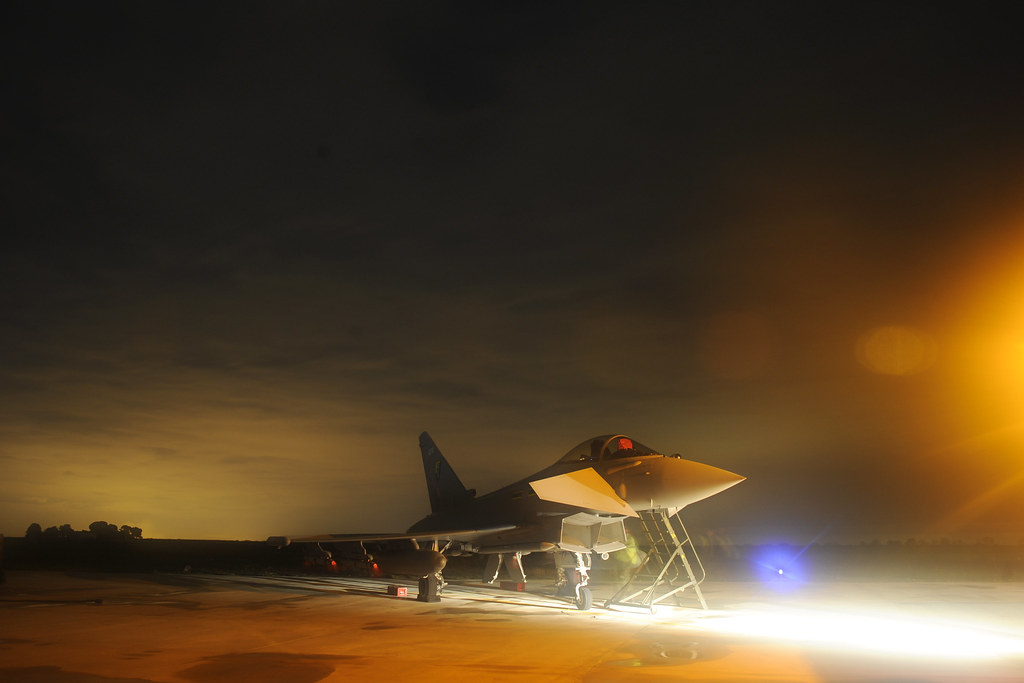
Image Credit: NATO




Comments are closed.