
Executive Summary
For the first time in its history, Canada is making strategic autonomy a guiding principle of its defence policy. However, the government has provided neither a concrete definition nor specific targets to assess its achievement, which risks turning it into a rallying cry that is more rhetorical than practical. This study addresses this gap: it defines Canadian strategic autonomy (CSA), identifies its dimensions, the vital interests that underpin it, and the threats that justify it, and then proposes a capabilities- and institutions-based roadmap to achieve it.
CSA is understood here as the ability to conduct military operations with the United States whenever possible, but without American support if necessary. This approach is one of risk mitigation rather than decoupling, and it is broken down into three dimensions: decision-making, operational, and industrial and technological. It constitutes a medium- and long-term objective, with a target horizon of at least 2035–2040.
KEY HIGHLIGHTS
- Two vital interests: The defence of Canada’s territorial integrity, including the Arctic and critical infrastructure, and that of its allies’ territorial integrity, along with the preservation of freedom of navigation for international trade.
- Three main threats: Conventional and hybrid threats from Russia, including a possible test of Article 5 within the next three to five years; the end of unwavering American support to European defence, which must become the guiding assumption for planning; and the rise of China, the effects of which would impact Canada even without direct confrontation.
- Three Key Constraints: Budgetary: Base defence spending will need to reach $159.1 billion by 2035–2036, according to the Parliamentary Budget Officer. Capacity: Only 61.3% of force elements are operationally ready, and the CAF faces a shortfall of approximately 16,000 personnel. Policy: Inconsistency between government rhetoric and procurement decisions.
- Defending Canadian territory: Securing and maintaining critical and defence infrastructure; cyber defence and counter-drone capabilities; a sovereign command-and-control system complementary to NORAD; space-based surveillance and communications; air and maritime surveillance; and air defence systems procured from non-U.S. suppliers.
- A mixed fleet of more than 130 combat aircraft: Complete the acquisition of the 88 F-35s by 2034, then add approximately 50 next-generation aircraft from 2035 onward, acquired through a non-U.S. allied program and paired with collaborative combat drones.
- A sovereign deep-strike capability: Allied diversification (JSM missiles, European ELSA program), a sovereign low-cost effector program, delivery systems, and end-to-end control of the targeting chain, in support of the Canadian Deep Precision Strike Capability (CDPSC) project.
- Defending allies: Providing attritionable capabilities (ammunition, interceptors, drones) and enablers (expanding the fleet of refueling aircraft to 12 or 15 and the GlobalEye fleet to 8 or 10), supplementing the twelve Type 212CD submarines with autonomous underwater vehicles and the combat aircraft fleet with collaborative combat drones, and building a land-based force of approximately 50,000 military personnel with staggered readiness.
- Four recommendations: Develop a new defence policy that explicitly defines vital interests; publish a ten-year investment plan validated by the Parliamentary Budget Officer; increase research and development to at least 3% of the defence budget; and provide structural funding for an independent analytical ecosystem.
- Risks Taken: CSA requires a generation of political consistency, exposes Canada to U.S. coercion, which can be managed through transparent and gradual risk mitigation, and opens a window of prolonged vulnerability: command autonomy is achievable within a decade, denial autonomy in fifteen to twenty years, and deep-strike autonomy beyond 2040.
For the first time since 1987, Canada has the financial resources and political will necessary to build credible strategic autonomy. The proposed roadmap aims to turn this ambition into reality before this window closes.
Read the full study here.
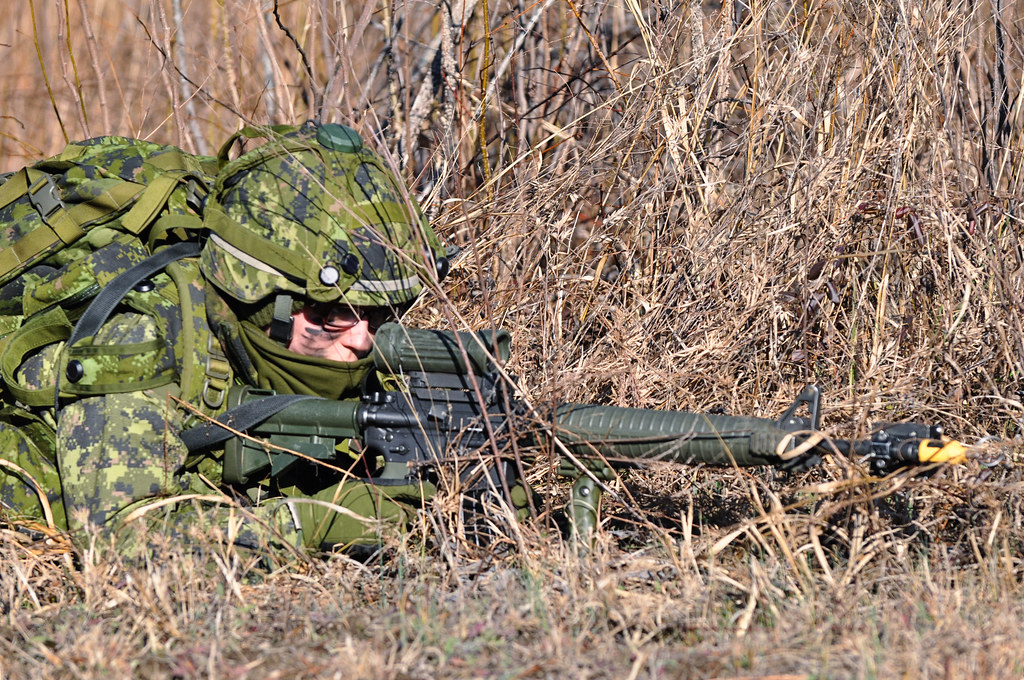
Image Credit: Virginia Guard Public Affairs via Flickr, CC BY-NC 2.0.




Comments are closed.