
This brief is part of the Strategic Analysis Network’ special Back to the Future essay series, which was financed through a grant from the Department of National Defence’s MINDS program.
Summary
Since Donald Trump’s return to the American presidency in 2025, the reliability of the United States as an ally within NATO has been seriously called into question. Faced with this uncertainty, Canada finds itself at a crossroads, a situation reminiscent of the one that followed the 1956 Suez Crisis. This article examines the three strategic postures Canada considered in the wake of that crisis—alignment with the United States, closer ties with Europe, and strategic independence—in order to draw lessons for the contemporary context. The analysis shows that each of these postures carries specific advantages and risks, and that none can be adopted in its pure form. The article concludes that Canada should favour a hybrid approach: maintaining sufficient North American cooperation, deepening its European partnerships, and actively diversifying its alliances to strengthen its strategic autonomy.
Introduction
Since 2025 and Trump’s arrival at the head of the American government, the question of the transatlantic alliance has repeatedly returned to the table. The United States has expressed, rhetorically, a firm desire to withdraw from European security issues and is seeking to shift the burden of defence onto its allies. Although, in terms of capabilities, the efforts of the Trump administration are open to qualification, a sword of Damocles still hangs over Europeans and Canada with respect to their ability to count on their common ally. Moreover, the growing number of aggressive American stances toward Greenland and toward Canada has a direct impact on transatlantic cooperation and, more particularly, on the North Atlantic Treaty Organization (NATO). The American desire to disengage, combined with its aggressiveness and the possibility of its withdrawal from the alliance, is creating growing uncertainty across the Western sphere. So, faced with the possible fracture of NATO, what defence posture should Canada adopt to strengthen its security and remain credible on the international stage?
Rarely has the transatlantic alliance come close to faltering. In 1956, however, during the Suez Crisis, NATO nearly broke apart because of the American reaction to the Franco-British decision to intervene in the Suez Canal following its nationalization by Nasser. This situation led Canada to consider a new posture to adopt in foreign policy. Should it follow the Europeans, and principally the United Kingdom, or continue down the path of alignment with the United States already begun in the 1940s? A third solution also emerged: the assertion of an autonomous foreign policy for a still-young, only recently independent country seeking to consolidate its national unity. These debates animated the Canadian political scene in the aftermath of the crisis, and again in the early 1960s.
This article addresses the lessons Canada drew from the Suez Crisis, chiefly concerning relations between allies in a context of discord and rupture, in order to examine, in a context with similarities, the postures Canada might adopt. To do so, it first examines the context of the 1960s and the current situation in order to draw parallels. It then turns to the three postures open to Canada—alignment with its American neighbour, alignment with the Europeans, and strategic independence through the pursuit of new partnerships—analyzing what they concretely imply for the country and the risks they carry, particularly given a United States that continues to voice strong ambitions with respect to its northern neighbour. This text proposes that Canada adopt a blend of the three postures: drawing on a defence model based on autonomy, continuing its cooperation with European allies, and putting in place a strategy of hedging toward its American neighbour.
1956 and 2025: Two Different but Similar Crises
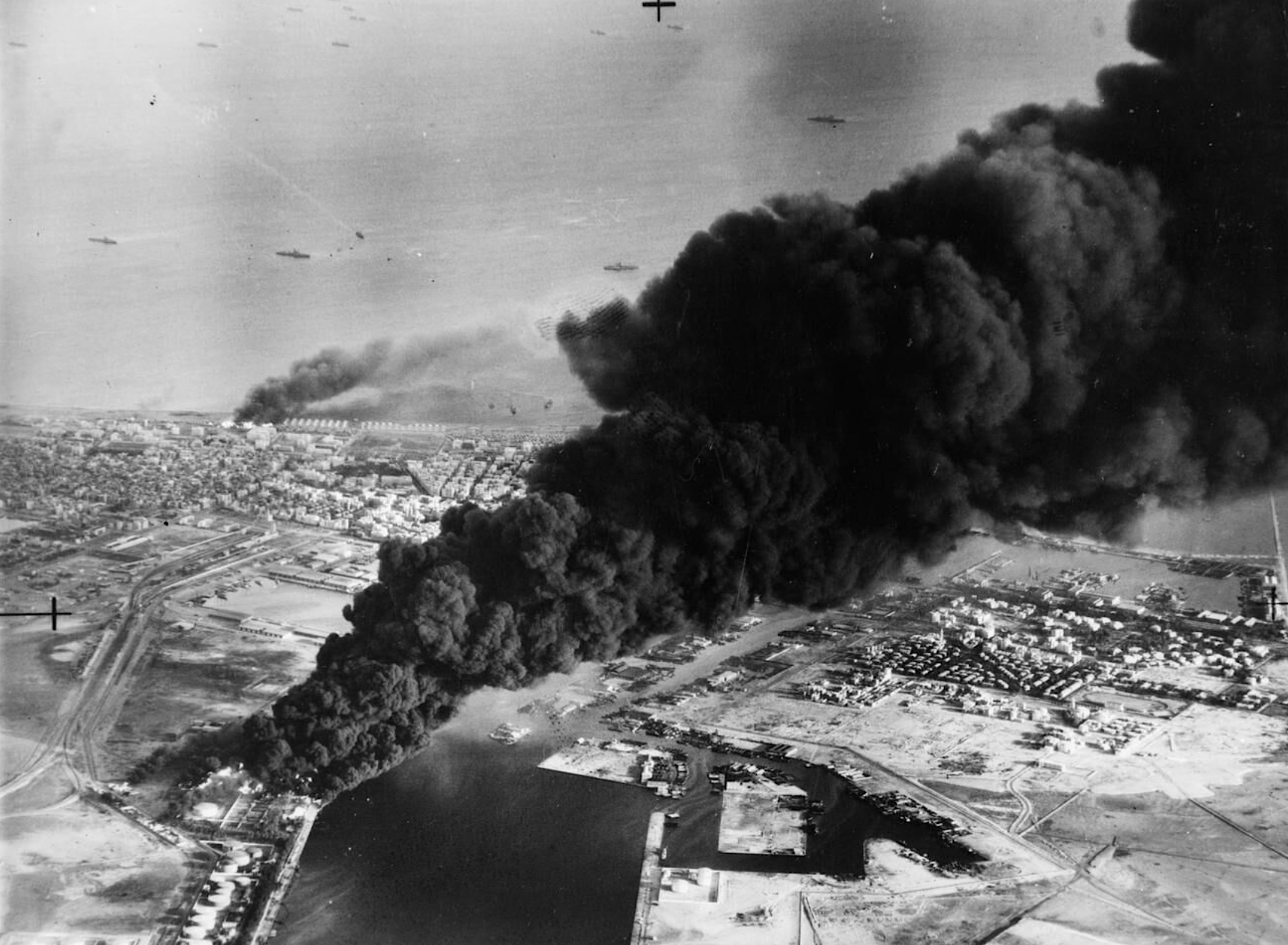
The situation surrounding the Suez Canal led to a major crisis in the late 1950s. Egyptian President Gamal Abdel Nasser’s nationalization of the canal triggered a sharp Franco-British reaction, as those two countries sought to regain control of infrastructure they had previously administered. Pressure from the United States brought about a genuine rupture in relations between allies, as well as a change of posture for France and the United Kingdom. This moment marks a fracture within NATO. Canada’s response to the crisis is well known: under the leadership of Foreign Affairs Minister Lester B. Pearson, the creation of a United Nations intervention force helped stabilize the situation and was praised around the world, earning him the Nobel Peace Prize.
This episode, however, gave rise to deeper debates within Canadian politics about what direction to take in a time of rupture within the alliance. Some called for following the United Kingdom, others argued for consolidating the link with the United States, while still others defended an autonomous and independent posture, at a time when Canada needed to strengthen its bicultural identity. The 1950s and 1960s were thus marked by a period of rupture between allies, placing Canada at the intersection of three paths.
Certain parallels can be drawn with the current situation. Today, Canada is no longer going through a crucial period of nation-building, although some identity issues have resurfaced since Trump’s arrival. Rather than building, Canada finds itself in a period of contestation because of the uncertainty surrounding the referendums in Quebec and Alberta. Moreover, the crisis is not of the same nature: it is no longer a matter of European powers wanting to keep their hold on former colonies, but of the unreliability of a previously valued ally, the United States. Trump’s second term has been marked by numerous high-profile moves that have profoundly altered perceptions of the international system and of NATO. The American president openly displays his desire to disengage from Europe, while multiplying aggressive acts and statements toward his allies on issues such as Greenland, the war in Ukraine, and relations with Canada. Given this, cooperation within NATO appears more difficult than before, which poses risks of division among members and may undermine its effectiveness, while Europe, driven largely by France, seeks to draw its partners toward strategic autonomy. Although this project is proving more complex than first envisioned, the split in transatlantic relations is deep enough that a review of past postures is called for.
Canada thus finds itself once again at a crossroads. It could choose to turn to its neighbour and strengthen its ties with it—although the American attitude toward Canada makes this option hard to envisage in the current context. It could also move closer to the Europeans, which would offer an alternative to an unpredictable neighbour, but with some uncertainty about Europe’s ability to guarantee its security and about the American reaction, as well as the fact that geographic distance places a heavy burden on cooperation with Europe. Finally, the search for outside partners and the assertion of an independent posture constitute a third path. Although the two moments are marked by crises of different natures, they bring back similar problems for Canada. The parallel is therefore relevant, and it is useful to examine the postures the country considered in the 1960s in order to gauge their resonance in the current context.
Three Possible Postures for Canada
The first posture considered was that of alignment with the United States. In the 1960s, some argued that, given its cultural and geographic advantages, Canada ought to deepen its relationship with the United States. This relationship was seen as a strategic asset: moving away from it would have caused the country to lose considerable influence on the world stage.
This logic also rested on the fact that, after the Suez Crisis, Canada enjoyed notable influence over American policy, particularly when it directly affected Ottawa. Some therefore believed the country should play an intermediary role, serving as a spokesperson for global concerns to Washington, notably for Western and European allies, but also for neutral or communist countries in the context of the Cold War. This is the idea of quiet diplomacy, championed by Lester B. Pearson: through its informal proximity to the United States, Canada could try to steer Washington’s policies through discreet channels. Moreover, coming out of the Second World War, alignment with its neighbour seemed the most natural path, particularly to benefit from the American security umbrella and continental defence. For proponents of this orientation, Canada should prioritize NORAD and NATO. Some, however, saw a risk of satellization, arguing that shared interests did not guarantee the absence of vassalage, while others considered this risk negligible.
This path thus rested on maximal rapprochement with the United States, bringing postures into line, taking full advantage of American coverage, and allowing Canada to serve as a diplomatic relay for other powers, in the hope of exerting influence on American foreign policy.
The second posture was that of strategic independence. Some believed that Canada should adopt a policy of neutrality, which would have allowed it to act for the common good and contribute to the resolution of international crises, something that would be impossible with alignment with Washington. This option did, however, mean giving up the security benefits tied to the relationship with the United States, notably NORAD coverage. Paradoxically, this rupture was also seen as protective: by no longer presenting itself as an American ally, Canada would have reduced its exposure to the geopolitical tensions arising from that alignment. Proponents of strategic independence also held that the priority of the moment was not maintaining American power, but strengthening Canada’s bicultural identity, promoting international equity, and the socio-economic modernization of the Third World. By opting for neutrality, Canada could have positioned itself as a leader of newly independent and decolonized nations, defending the interests of the countries of the Global South. Unlike quiet diplomacy, this approach assumed that Canada would “speak loudly” and publicly stand by its positions, out of a logic of distrust toward the United States. Risks of retaliation were also identified, since the United States had shown, in its relations with Egypt, Poland, and Yugoslavia, that it did not hesitate to use economic or political pressure. The existing alignment had until then spared Canada such risks; strategic independence would therefore have increased the likelihood of American coercive measures in the event of policy differences.
This approach thus rested, in the context of the time, on the need to assert Canadian identity and to diversify partnerships. The question of neutrality or of distancing from the United States encompassed the idea that Canada could become an influential player among the countries of the Third World and the non-aligned. It nonetheless implied an effort at autonomous military build-up and a reduction of dependence on Washington, at the risk of exposing the country to significant retaliation.
Finally, the third possible path was that of alignment with the Europeans. Less popular at the time, it consisted of supporting the British and French positions in the post-Suez period. Given its strong historical ties with both countries, Canada could have found first-rate strategic partners there. The Suez Crisis had in fact revealed divisions within Canadian society over whether to follow the United Kingdom or to favour the relationship with the United States. The idea of a rapprochement with Europe, beyond the NATO framework alone, was present in the debates. This rapprochement was also seen as a way of rebalancing the relationship with Washington and of reducing structural dependence on the American neighbour by diversifying strategic partnerships. It could also fit into a perspective of counterbalancing American influence, both in Europe and in Canada, whether within NATO or outside it. Finally, some stressed that strengthening the transatlantic link, notably through NATO, created a security interdependence that made Europe an indirect guarantor of Canadian security.
Alignment with Europe thus offered Canada the possibility of freeing itself from its American dependence and weaving a new network of partners, both within an allied framework and outside it. This path would not, however, be the one taken in the 1960s, as Canada turned increasingly toward the United States, in effect increasing its dependence on its North American neighbour.
What Are the Implications for Canada?
The first path available in the current situation is still that of alignment with the United States. The structural and geographic interdependence between the two countries lends this orientation a certain logic: NORAD remains an unavoidable pillar of bilateral defence cooperation, and economic and trade ties remain tightly intertwined, with no real possibility of self-sufficiency between the two countries. The Canadian government, even in the current context of tension, continues to maintain converging interests with Washington without breaking openly with the American administration. Transposed to the present context, this posture would involve deepening the diplomatic relationship with the Trump administration, in the spirit of the quiet diplomacy so dear to Pearson: quietly influencing Washington’s direction rather than opposing it openly. This would, however, require prior alignment with the priorities of the administration in office, at the risk that any public disagreement would generate friction. On the defence front, this path would mean maintaining the existing North American security architecture, while forgoing diversification of partnerships toward Europe, Sweden, or other actors.
This option, though pragmatic in appearance, is not without trade-offs. It currently implies a form of subordination to U.S. positions and would confine Canada to an intermediary role that does not necessarily reflect its own ambitions. It would also accentuate an already deep dependence on Washington and expose the country further to American interference. Even so, a total break with the United States remains unthinkable: this path should therefore be seen as a minimal foundation, not as a sufficient strategy in itself.
The second path is that of rapprochement with Europe. This orientation is already partly under way: integration into the SAFE program, the possible but unconfirmed partnership with Sweden and SAAB around a potential fleet of Gripens, the acquisition of airborne early warning aircraft, participation in the coalition of the willing, and the military deployment in Latvia all point to a growing European anchoring in Canadian defence policy, at least politically and rhetorically. On the capability side, Canadian and European participation in each other’s defence industries remains too distant, which requires partnerships to be made concrete and a stronger commitment from both sides toward the other.
Going further would nonetheless require structural choices: making the acquisition of European military equipment the norm to reduce dependence on American manufacturers, attracting European defence industrial base investment to Canada, intensifying transatlantic trade, and perhaps deepening the institutional framework linking Ottawa to Brussels. Such a pivot would not go unnoticed in Washington and would expose Canada to measures of retaliation—a risk already raised in the strategic debates of the 1950s. It must also be acknowledged that Canadian and European interests do not always coincide: perceived threats, geographic priorities, and strategic ambitions diverge enough to make full alignment unrealistic. This path therefore appears more as a lever for rebalancing than as a full and complete alternative.
The third path, finally, is that of strategic independence. Canada would give itself greater autonomy in defence and foreign policy, or even an openly declared non-aligned posture. As in the 1960s, this would involve seeking new partnerships outside the American and European spheres. Certain contemporary signs point in this direction: Carney’s stance on the multipolar world order, the rapprochement with China, or the cooperation possible with countries such as South Korea in rearmament, or with Australia. This would also be reflected in a pullback of Canadian positions with respect to American decision-making.
This path raises, however, a question that the debates of the 1960s had addressed: national unity. In 1956, the Suez Crisis had revealed tensions between Canada’s English- and French-speaking communities and the need for the country to work on its identity and bicultural character. Today, this fracture takes a different but equally salient form. The referendums announced in Alberta and Quebec are bringing back significant risks to Canadian unity, at a time when American pressure has only intensified. A posture of strategic independence could appear to be the solution while also heralding new problems. By breaking with North American security structures and with NATO in order to assert a non-aligned or neutral posture, Canada could fuel internal tensions rather than ease them and isolate itself on the international stage from some of its allies. For provinces that see the relationship with the United States as a vital economic issue, such a disengagement would be politically difficult to defend. The assertion of an autonomous path must therefore be accompanied by a message of national cohesion, failing which it risks weakening the country more than strengthening it.
Conclusion
Thus, Canada need not follow any one of these paths in full. Each has its own problems: increased dependence, risk of retaliation, risk of isolation and of loss of credibility. These perspectives represent archetypes of workable positions. In this sense, Canada could pursue both integration with the United States at certain levels and, in parallel, develop its alignment with Europe, as it is already doing, without pushing fully toward a rupture. Finally, the search for new partners is becoming more attractive as a way of strengthening the established objectives of independence in defence and foreign policy. In light of the historical analysis and contemporary issues, five policy recommendations emerge to guide Canadian strategy:
- Maintain pragmatic engagement with the United States through NORAD. Canada must preserve existing continental defence mechanisms while refusing any form of political vassalage. Informal, discreet dialogue—in the tradition of quiet diplomacy—would allow it to exert influence on Washington without compromising Canadian sovereignty.
- Accelerate and institutionalize the strategic rapprochement with the European Union. Partnerships already under way—the SAFE program, acquisition of European materiel, presence in Latvia—must be deepened and formalized. Canada should consider framework agreements on defence cooperation with the EU in order to reduce its dependence on American equipment and security guarantees.
- Invest heavily in national defence capabilities. Any posture of strategic autonomy, even a partial one, requires a credible industrial and military base. Canada must give itself the means for a more autonomous defence, notably by meeting NATO’s 2 per cent of GDP target, diversifying its suppliers of military equipment, and developing a competitive national defence industry.
- Diversify strategic alliances beyond the transatlantic framework. Canada should strengthen its partnerships with middle powers that share its values, notably South Korea, Japan, and Australia. This diversification would reduce the country’s vulnerability to reversals in American foreign policy, while also offering new technological opportunities in the defence sector.
- Articulate a clearly defined foreign policy doctrine. Given the instability of the geopolitical environment, Canada would do well to publish a defence and foreign policy white paper explicitly setting out its strategic priorities, its red lines in the face of American pressure, and its commitments to its partners. Such doctrinal clarity would strengthen Canada’s international credibility.
Image Credit: Imperial War Museums, CC BY-NC-SA 4.0.



Comments are closed.