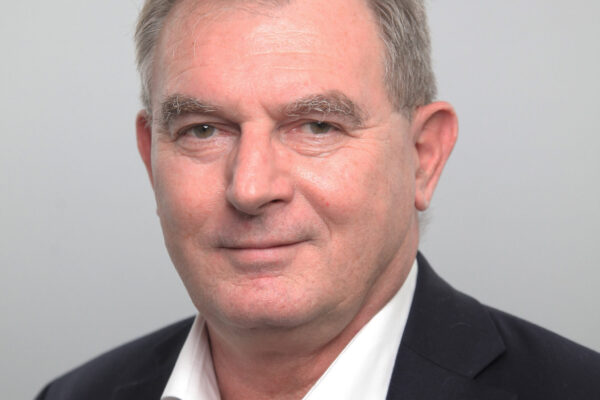
Brigadier General Pesme (Rted) is a French combat engineer officer, who specialized during the first part of his career in underwater reconnaissance and river-crossing operations (1987-1995). He then developed an expertise in European defense issues and the transatlantic relationship through various assignments: in France, at the Joint Staff (2003-2006 and 2015-2018) and the Delegation for Strategic Affairs, where he was head of the North America desk (2008-2011); at NATO, first at Allied Command Transformation in Norfolk as Executive Assistant to the Supreme Allied Commander Transformation (2013-2015) and then at the NATO’s International Military Staff in Brussels, where he was Deputy…
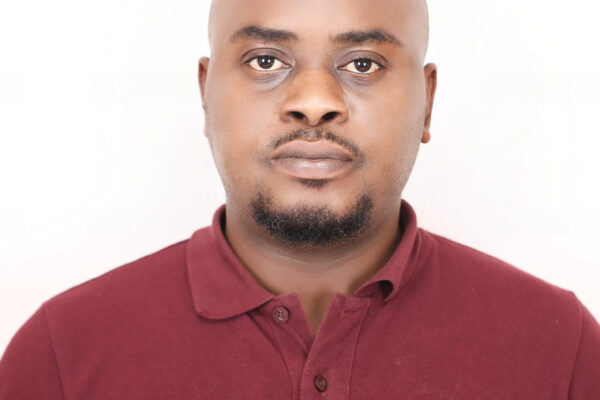
Falk Petegou is a post-doctoral fellow at the Chair in International Francophonie Research on Political Aspirations and Movements in Francophone Africa at the University of Ottawa. He was a lecturer at the Université Protestante d'Afrique Centrale, where he taught the following courses, among others: Conflict theory and typology, Peace building approaches, Identities and conflicts in Africa, Conflict resolution practice. He has also provided consultancy services to a number of institutions, including UNICEF, the Service Civil pour la Paix and was a visiting researcher at the Frankfurt Institute for Peace Research in Germany (HSFK) between 2014 and 2015. His work focuses…
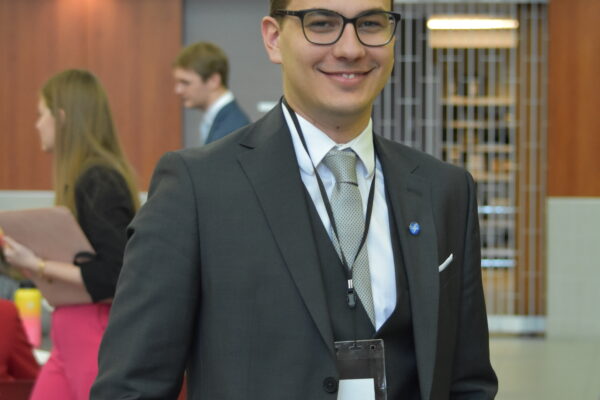
Maxime Philaire is a Ph.D. candidate in International Studies at Laval University’s École supérieure d’études internationales under the supervision of Prof. Anessa Kimball, having previously completed a master’s degree in political science at Laval University with a thesis on strengthening the legitimacy of the Russian Federation’s regime through the construction of national identity and the militarization of youth. Prior to that, he earned a bachelor’s degree in International Relations at ILERI Paris, including a semester at the Moscow State Institute of International Relations (MGIMO). Alongside his studies, he served as President of the OTAN Laval association, which participates annually in…
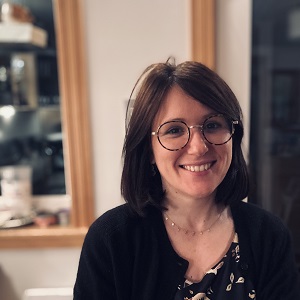
Pauline Pic holds a Ph.D. in geography and is a certified high school teacher of geography. Her dissertation, completed at Laval University, focused on the scales of security in the Arctic region. She then completed a postdoctoral fellowship at the École supérieure d'études internationales, where she worked on the governance of global commons, particularly the Central Arctic Ocean and outer space. As holder of the Transforming Climate Action Research Chair in the Geopolitics of Seas and Oceans, she joined the Department of Biology, Chemistry, and Geography at UQAR to continue her research on ocean governance. She is interested in the…
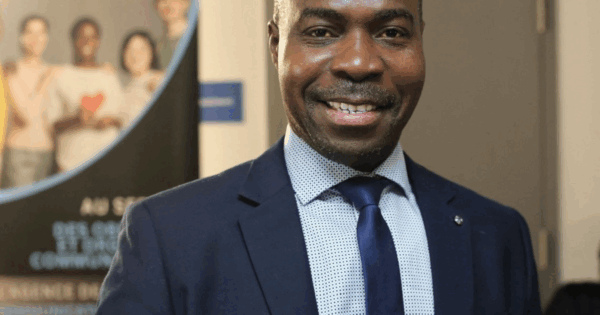
Abel Pli is a specialist in international relations and populism issues. With a PhD in political science from the École nationale d’administration publique de Montréal, he shows how populist rhetoric in the West is impacting transatlantic relations. Populism brings with it a new worldview based on the defense of egocentric national interests, economic protectionism, unilateralism, bilateralism, and isolationism. Such a worldview runs counter to the values of the liberal international order. His research argues that the questioning of liberal values such as collective identity, economic interdependence, and multilateralism, which are rejected by populist discourse, weakens NATO's cohesion. By analyzing the…
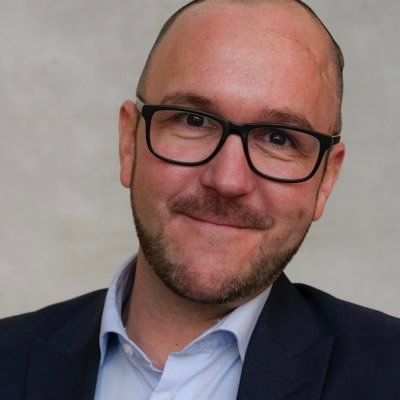
Joël Plouffe is advisor for the Arctic Council Secretariat. He is also a researcher at CIRRICQ (Center for Interuniversity Research on the International Relations of Canada and Québec) at the École nationale d’administration publique (ENAP) in Montréal, managing editor of the Arctic Yearbook. His research interests include security and defense, geopolitics of the Arctic, regions of the circumpolar North, Northern Québec, and U.S.-Canada relations and foreign policy. Mr Plouffe has conducted research in the Arctic regions of Russia, the US (Alaska), Norway (Svalbard and mainland), Finland, Sweden and Canada (Nunavik, Northwest Territories). He is a Fellow of The Canadian Global…
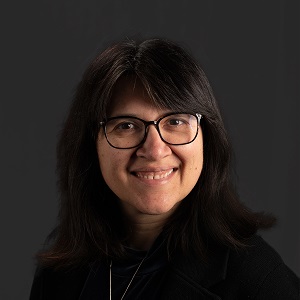
Maria Popova is an Associate Professor of Political Science at McGill University, the Scientific Co-Director of the Jean Monnet Center Montreal and Editor of the Cambridge Elements Series on Politics and Society from Central Europe to Central Asia. She held the Jean Monnet Chair “Europe and the Rule of Law” in 2017-2021. Her work focuses on rule of law and democracy in Europe. Her award-winning book Politicized Justice in Emerging Democracies (Cambridge UP, 2012) examines the weaponization of law to manipulate elections and control the media and the obstacles to judicial independence in Russia and Ukraine in the late-1990s-early 2000s.…
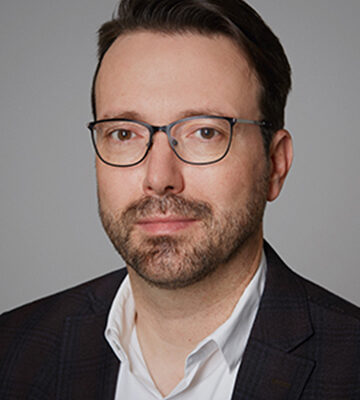
Mark Purdon is Associate Professor in the Department of Strategy, Social and Environmental Responsibility at the School of Management (ESG), Université du Québec à Montréal (UQAM), where he has held the Chair on Decarbonization. With a PhD in political science, he works at the intersection of comparative politics, international relations, and public policy, studying the political economy of decarbonization, with particular attention to carbon markets, climate finance, and green industrial policy. His work on global climate governance draws on neoclassical realism to explain how domestic politics and international power shape climate action and opportunities for international climate cooperation. His applied…
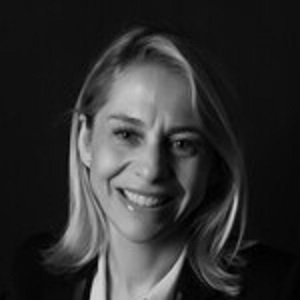
Maud Quessard is Research Director at the Institute for Strategic Research of the French War College (IRSEM), where she has headed the Europe, Transatlantic Space and Russia programme since 2020, and Associate Professor of American foreign policy. She holds a PhD in North American studies from the Sorbonne Nouvelle University (2009) and was a Visiting Fellow at Harvard University’s Department of History and Belfer Center in 2015. Her work addresses United States public diplomacy and influence strategies, information warfare, and the contemporary transformations of American power. She co-directs the Observatory of American Foreign Policy with Jean-Baptiste Velut, co-leads the ANR…